Claude 3.5 Sonnet: Anthropic's Multimodal Powerhouse#
Anthropic's Claude 3.5 Sonnet has emerged as one of the most capable multimodal AI models available, offering exceptional performance in vision tasks, document understanding, and complex reasoning. With its 200K token context window and sophisticated image analysis capabilities, Claude Vision enables AI applications that were previously impractical to build.
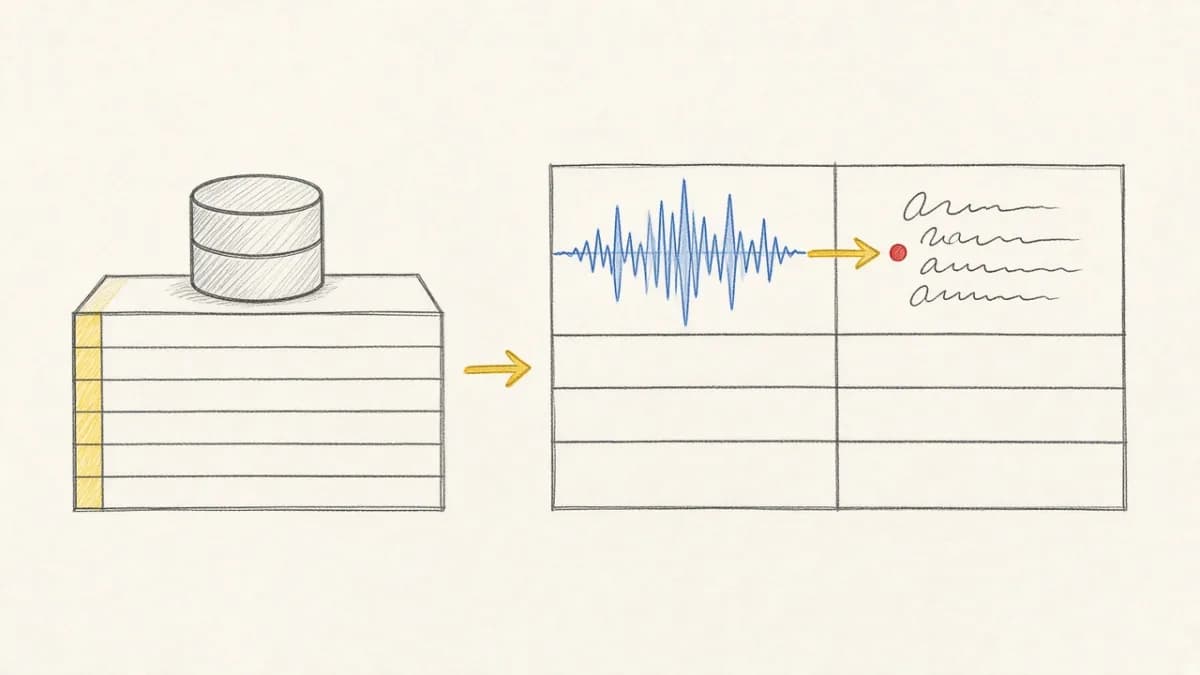
However, integrating Claude AI multimodal inputs into production systems typically requires complex orchestration, state management, and careful handling of rate limits and costs. This is where Pixeltable transforms your development experience, providing unified infrastructure that makes working with Claude's multimodal capabilities seamless and scalable.
Understanding Claude's Multimodal Capabilities#
Before diving into implementation, let's understand what makes Claude 3.5 Sonnet multimodal capabilities special:
Advanced Vision Understanding#
- Image Analysis: Claude can analyze photographs, diagrams, charts, and screenshots with exceptional accuracy
- Document Processing: Native understanding of PDFs, forms, and complex layouts
- Chart & Graph Interpretation: Extract data and insights from visualizations
- OCR & Text Extraction: Read text from images without separate OCR services
- Spatial Reasoning: Understand relationships between visual elements
Key Advantages for Production AI#
- 200K Context Window: Process entire documents with images in single requests
- High Accuracy: Industry-leading performance on vision benchmarks
- Reliable Outputs: Consistent, structured responses for production use
- Safety Focus: Built-in guardrails for responsible AI deployment
- API Stability: Enterprise-grade reliability and support
Why Combine Pixeltable with Claude AI?#
Using Claude Vision API directly requires managing complex workflows. Pixeltable provides the infrastructure layer that transforms Claude from powerful but manual API calls into a robust, production-ready system:
Infrastructure Benefits#
- Automatic Orchestration: Declarative workflows eliminate orchestration complexity
- State Management: Built-in persistence for Claude-powered agents
- Rate Limiting: Intelligent throttling prevents API quota exhaustion
- Cost Optimization: Incremental processing reduces redundant API calls
- Multimodal Storage: Native support for images, documents, videos alongside Claude responses
- Complete Lineage: Automatic tracking from input to Claude output
Getting Started: Claude + Pixeltable Setup#
Setting up Anthropic Claude integration with Pixeltable is straightforward:
Prerequisites#
Basic Image Analysis with Claude Vision#
Here's how to create an intelligent image analysis pipeline using Claude 3.5 Sonnet vision:
Advanced Document Understanding with Claude#
Claude's document understanding capabilities excel at processing complex PDFs, forms, and multi-page documents:
Building Multimodal AI Agents with Claude#
Claude's vision capabilities make it ideal for building sophisticated AI agents that can process both text and visual information:
Claude Vision vs GPT-4 Vision: Key Differences#
Understanding when to use Claude Vision vs other multimodal models helps optimize your AI applications:
| Capability | Claude 3.5 Sonnet | GPT-4o |
|---|---|---|
| Context Window | 200K tokens | 128K tokens |
| Document Analysis | Excellent for complex PDFs | Very good |
| Chart/Graph Reading | Superior accuracy | Good |
| Reasoning Quality | Excellent for complex logic | Excellent |
| Best Use Cases | Technical docs, research papers, forms | General vision, creative tasks |
Building Multimodal RAG with Claude#
Claude's large context window makes it exceptional for multimodal RAG systems:
Technical Document Analysis at Scale#
Claude excels at analyzing technical documentation, research papers, and code:
Intelligent Form Processing with Claude#
Claude multimodal inputs are particularly powerful for processing forms, invoices, and structured documents:
Cross-Modal Reasoning: Combining Multiple Inputs#
Claude can reason across multiple images and text inputs simultaneously:
Cost Optimization for Claude Vision#
Claude's pricing is based on tokens, including image tokens. Pixeltable helps optimize costs through intelligent caching and preprocessing:
Smart Image Preprocessing#
Selective Processing Based on Priority#
Real-World Use Cases for Claude Vision#
Healthcare: Medical Records Processing#
Finance: Financial Statement Analysis#
E-commerce: Product Content Generation#
Production Monitoring for Claude Integration#
Monitor Claude API usage and performance within Pixeltable:
Robust Error Handling for Production#
Handle Claude API errors gracefully with Pixeltable's automatic retry mechanism:
Best Practices for Claude + Pixeltable#
When to Choose Claude Vision#
- Complex Documents: Research papers, legal contracts, technical manuals
- Data Extraction: Forms, invoices, structured documents
- Chart Analysis: Financial charts, scientific graphs, data visualizations
- Long Context: When you need to process multiple images or lengthy documents
- Reasoning Tasks: Complex visual reasoning and multi-step analysis
Optimization Tips#
- Resize Images: Use optimal image sizes to reduce token costs
- Batch Wisely: Group related analyses to leverage context efficiently
- Cache Aggressively: Let Pixeltable cache responses for identical inputs
- Use Haiku for Simple Tasks: Switch to Claude 3 Haiku for basic vision tasks
- Monitor Token Usage: Track input/output tokens to manage costs
Choosing Between Multimodal Providers#
Pixeltable makes it easy to use multiple providers based on task requirements:
Conclusion: Claude Vision for Production Multimodal AI#
Claude 3.5 Sonnet represents the cutting edge of multimodal AI, offering exceptional capabilities for document understanding, vision tasks, and complex reasoning. Combined with Pixeltable's declarative infrastructure, you can build production-ready applications that leverage Claude's power without the typical integration complexity.
Whether you're processing legal documents, analyzing financial statements, building intelligent customer support, or creating automated content pipelines, Claude AI multimodal capabilities with Pixeltable provide the foundation for sophisticated, reliable AI applications.
The key is treating Claude not as a standalone API to call manually, but as part of a comprehensive data infrastructure that handles orchestration, state management, cost optimization, and monitoring automatically. This is how teams build AI applications that scale from prototype to production without architectural rewrites.
Start Building with Claude and Pixeltable#
- Claude Vision Documentation - Official Anthropic guide
- Your First Pixeltable Project - Learn the fundamentals
- Compare with Gemini Integration - Alternative multimodal provider
- AI Agent Architecture Guide - Build Claude-powered agents
- Production RAG Systems - Multimodal RAG with Claude
- Pixeltable on GitHub - Full source code and examples
- Join our Discord Community - Get help with Claude integration
Experience the power of Claude's multimodal AI with infrastructure that just works. 🚀