AI Agent Architecture: The Foundation of Intelligent Systems#
AI agent architecture has become the cornerstone of modern autonomous systems. These AI agent systems powered by Large Language Models (LLMs) promise to automate complex tasks by interacting with digital environments autonomously. However, building effective and reliable AI agents requires understanding the fundamental architecture patterns and solving critical challenges like state management in complex AI agent systems.
This practical guide to building agents explores the core architectural components and demonstrates how Pixeltable provides the essential declarative data infrastructure for robust AI agent architecture. We'll also examine the Pixelagent blueprint, which leverages this foundation to simplify building custom agents.
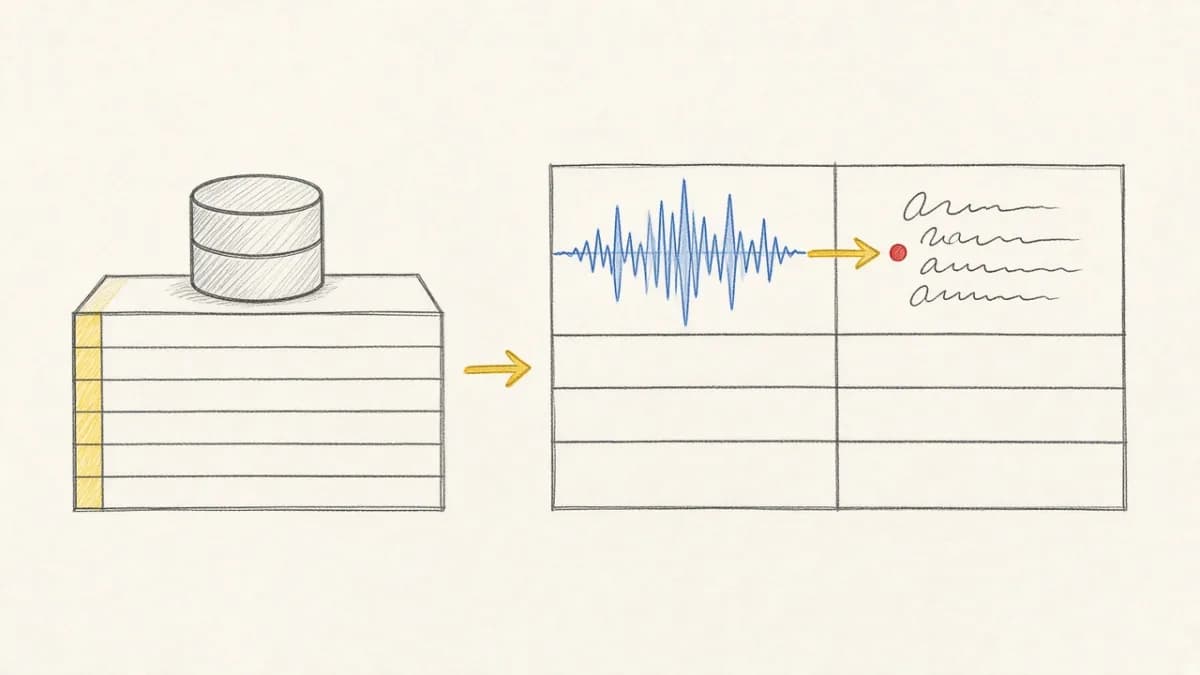
Modern AI agents represent the intersection of an LLM, storage, and orchestration. Pixeltable unifies this interface into a single declarative framework, making it the optimal choice for engineers to build custom agentic applications with comprehensive memory, tool-calling, and state management capabilities.
To understand how these components work together, explore our interactive AI agent architecture diagram, which visualizes the four key layers of modern agent systems.
Core Components of AI Agent Architecture#
Effective AI agent architecture typically combines several key components that work together to create intelligent, autonomous behavior:
- Brain (LLM): The core reasoning engine (like GPT-4o, Claude 3, Gemini) responsible for understanding instructions, planning, decision-making, and response generation in your AI agent systems.
- Memory & State Management: Critical for state management in complex AI agent systems.
- Short-Term Memory: Often the LLM's immediate context window for recent interactions.
- Long-Term Memory: Persistent storage using vector search (RAG) for relevant knowledge retrieval. Pixeltable tables and embedding indexes excel at this challenge.
- State Persistence: Maintaining agent state across sessions and interactions.
- Planning & Orchestration: Breaking down goals into executable steps. Techniques like Chain-of-Thought or ReAct help structure plans within the AI agent architecture.
- Tool Integration: Enabling AI agents to interact with external systems via functions or APIs (e.g., web search, database access, code execution). Pixeltable provides robust mechanisms for defining and orchestrating these tools.
State Management in Complex AI Agent Systems#
One of the biggest challenges in AI agent architecture is handling state management in complex AI agent systems. Traditional approaches often struggle with:
- State Persistence: Maintaining agent state across conversations and sessions
- Memory Consistency: Ensuring consistent access to both short-term and long-term memory
- Multi-Agent Coordination: Managing state when multiple agents interact
- State Versioning: Tracking state changes for debugging and rollback
- Concurrent Access: Handling multiple simultaneous interactions safely
Pixeltable's declarative approach addresses these state management challenges by treating agent state as data, with automatic versioning, lineage tracking, and consistent storage patterns.
The AI Agent Development Lifecycle#
Building robust AI agents follows a systematic development process. This practical guide to building agents covers each essential phase:
- Define Purpose & Scope: Clearly articulate the agent's goal and limitations. Start simple with well-defined objectives.
- Design Agent Architecture: Plan the AI agent architecture including memory patterns, tool requirements, and state management needs.
- Data Preparation & Collection: Gather and preprocess necessary data for your AI agent systems.
- Pixeltable Advantage: Seamlessly ingest and transform diverse data types declaratively.
python - Choose Core Model: Select the primary LLM for the agent's "brain" in your AI agent architecture.
- Implement Agent Logic & State Management: Code the agent's planning, memory access, and tool invocation logic with proper state management.
- Pixeltable Advantage: Build directly on Pixeltable's infrastructure for robust state management in complex AI agent systems. Use computed columns and UDFs for data processing, state updates, and orchestrating tool calls.
python - Testing & Validation: Rigorously test functionality, reliability, and safety of your AI agent systems.
- Pixeltable Advantage: Automatic data lineage and versioning aid debugging, reproducibility, and experiment tracking in AI agent architecture.
python - Deployment: Integrate the AI agents into their target environment with proper monitoring.
- Monitoring & Optimization: Continuously monitor performance and refine the AI agent architecture.
- Pixeltable Advantage: Built-in lineage provides observability for complex AI agent systems. Incremental updates optimize retraining and refinement computations.
python
Building Blocks for AI Agent Architecture#
Pixeltable serves as the unified data and orchestration engine for AI agent systems, while Pixelagent offers blueprints demonstrating common patterns built upon this foundation.
Advanced Memory Management & State Persistence#
Effective state management in complex AI agent systems requires sophisticated memory patterns. Pixeltable tables inherently store agent state, including conversation history, simplifying memory persistence. This approach unifies execution results and business state within a single, reliable datastore.
For long-term memory and RAG capabilities in your AI agent architecture, Pixeltable's integrated embedding indexes provide powerful vector search without needing separate databases.
Tool Integration & Orchestration in AI Agents#
Modern AI agents require seamless tool integration. Define Python functions as tools using Pixeltable's @pxt.udf decorator. The engine orchestrates tool invocation based on LLM outputs, managing state and data flow automatically.
Pixeltable enables an "Agent-as-Tool" pattern for complex AI agent systems, simplifying multi-agent architectures as detailed in our Team Workflow post.
Planning & Orchestration in AI Agent Architecture#
Pixeltable's declarative nature provides the foundation for orchestrating complex agentic loops (like ReAct) in your AI agent systems. State changes are reliably managed across steps, addressing key state management challenges. The Pixelagent planning examples demonstrate concrete patterns.
Multimodal AI Agent Capabilities#
Leverage Pixeltable's core strength in your AI agent architecture: process images, videos, and audio directly within agent workflows using computed columns and UDFs, enabling truly multimodal AI agents without separate pipelines.
Practical Example: RAG-Enabled AI Agent Foundation#
Building AI agents with knowledge retrieval capabilities requires robust RAG infrastructure. Pixeltable significantly simplifies this aspect of AI agent architecture:
Pixeltable handles the chunking, embedding generation, indexing, and incremental updates automatically as new documents are added, providing robust state management for knowledge bases.
Addressing AI Agent Architecture Challenges#
Pixeltable's declarative approach inherently addresses common challenges in AI agent systems and complex AI agent systems:
- Reliability & Orchestration: Declarative definitions and automatic dependency tracking reduce errors compared to complex imperative orchestration code in AI agent architecture.
- Observability: Built-in data lineage makes tracing agent decisions and debugging failures easier in complex AI agent systems.
- State Management: Agent state, memory, and tool call history are naturally handled by Pixeltable tables, solving state management in complex AI agent systems.
- Multimodal Complexity: Unified handling of various data types simplifies building richer, multimodal AI agents.
- Modularity: Complex agents can be built by composing smaller, focused Pixeltable components, making AI agent architecture more maintainable.
- Scalability: Designed to handle growing data volumes and complex workflows efficiently in production AI agent systems.
Frequently Asked Questions About AI Agent Architecture#
What is AI agent architecture?
AI agent architecture refers to the structural design and components that enable AI agents to perceive, reason, plan, and act autonomously. It typically includes the LLM brain, memory systems, planning mechanisms, tool integration, and state management layers.
How do you handle state management in complex AI agent systems?
State management in complex AI agent systems requires persistent storage, versioning, concurrent access control, and consistency guarantees. Pixeltable addresses this by treating agent state as declarative data with automatic lineage tracking, versioning, and reliable persistence across agent interactions.
What are the main challenges in AI agent architecture?
Key challenges include ensuring reliability, managing complex state across interactions, integrating tools effectively, handling errors gracefully, providing observability for debugging, achieving scalability, and maintaining security in AI agent systems.
How does Pixeltable simplify AI agent architecture?
Pixeltable provides declarative data infrastructure that unifies multimodal data storage, transformation, indexing, state management, versioning, lineage tracking, and tool orchestration. This eliminates the need for complex custom infrastructure in AI agent systems.
What's the difference between AI agents and traditional chatbots?
AI agents have greater autonomy, sophisticated planning capabilities, persistent memory, and the ability to use multiple external tools to achieve complex, multi-step goals. Traditional chatbots typically focus on conversational responses with limited tool use and memory.
What are multi-agent systems in AI agent architecture?
Multi-agent systems involve multiple specialized AI agents collaborating to solve complex problems. They require sophisticated orchestration, communication mechanisms, and shared state management. Pixeltable provides the foundational infrastructure for managing data and state in such complex AI agent systems.
Conclusion: Master AI Agent Architecture with Declarative Infrastructure#
Building effective AI agents requires understanding both the architectural patterns and solving practical challenges like state management in complex AI agent systems. If you're new to Pixeltable, we recommend starting with our hands-on tutorial for building a smart image organizer to understand the fundamentals before diving into agent architecture. While the intelligence layer is crucial, the underlying data infrastructure and orchestration often become the biggest bottleneck.
Pixeltable provides the missing declarative data infrastructure layer for robust AI agent architecture, simplifying state management, multimodal data handling, indexing, lineage tracking, and orchestration. The Pixelagent blueprint demonstrates how to leverage this foundation to build production-ready AI agent systems efficiently.
Stop wrestling with infrastructure complexity in your AI agent architecture. Focus on building intelligent behavior while Pixeltable handles the data foundation.
- Install Pixeltable:
pip install pixeltable - Explore Pixelagent: github.com/pixeltable/pixelagent
- Interactive Architecture: View our AI Agent Architecture Diagram
- Read the Docs: docs.pixeltable.com
- Join the Community: Pixeltable Discord
- MCP Integration: Learn about Pixeltable MCP Servers for exposing agent data to external LLM clients.