Bottom line up front#
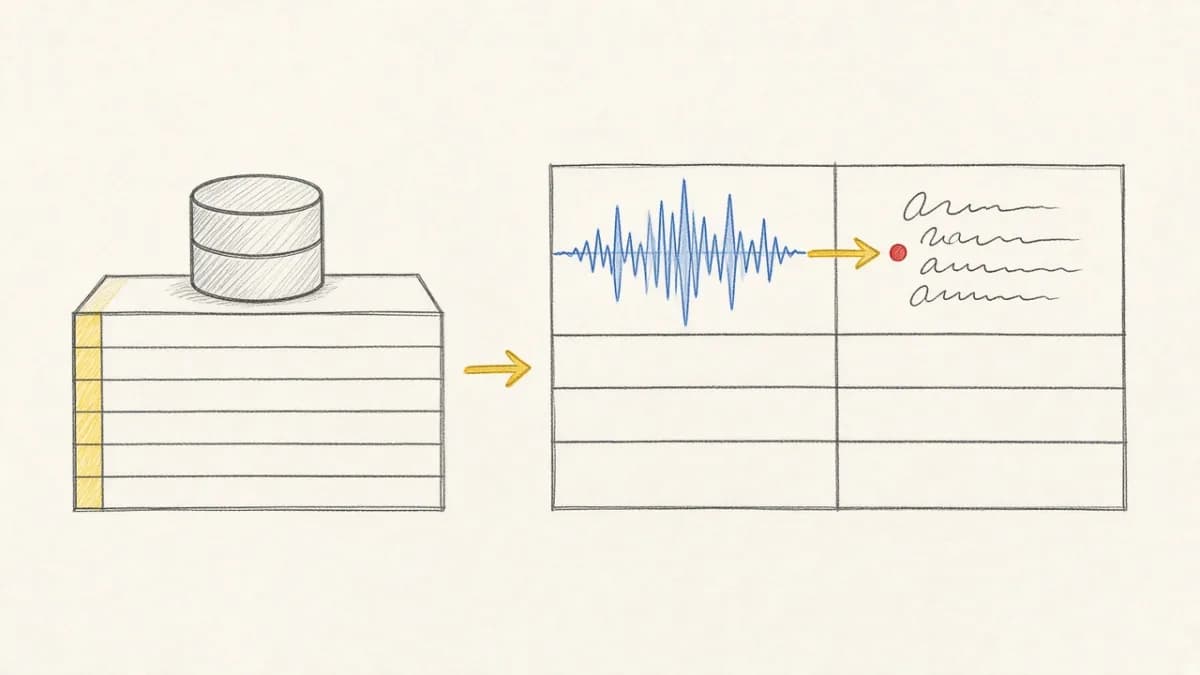
Pixeltable's database-centric architecture provides an ideal foundation for building persistent, stateful AI agents that maintain context across sessions and scale efficiently. Unlike many frameworks that treat memory as a complex abstraction users must build and often require additional infrastructure for persistence, Pixeltable views memory as a synergistic combination of storage, retrieval, and orchestration, enabling users to easily roll out their own tailored memory solutions. Pixeltable's declarative approach offers built-in state management through computed columns, automatically maintaining agent memory and enabling long-running operations. This capability addresses the fundamental limitation of traditional LLM-based applications (their inability to remember past interactions), making Pixeltable particularly valuable for data scientists and ML engineers developing sophisticated agent systems that require persistent memory.
The rise of stateful agents#
The AI agent landscape has undergone a fundamental shift in 2024-2025. While early agent implementations were essentially stateless, treating each interaction as an isolated event, modern agents now maintain persistent memory and actually learn during deployment. This evolution represents one of the most significant advancements in practical AI applications.
Stateless agents suffer from critical limitations. They can't remember previous interactions beyond their limited context window, forcing users to constantly remind them of important information. They can't learn from past mistakes or build on previous successes. And they can't maintain ongoing relationships with users in any meaningful way.
Stateful agents solve these problems by maintaining persistent memory across multiple interactions and sessions. Frameworks like Letta (formerly MemGPT), LangGraph, and Mem0 have emerged in the stateful agent space, each implementing sophisticated memory architectures inspired by human cognitive models or operating system principles.
Why memory architecture matters#
Building effective stateful agents requires sophisticated memory management systems. Current best practices implement multiple memory types:
- Working memory: Holds current context and immediate interaction history within the agent's context window
- Episodic memory: Stores specific past experiences and interactions
- Semantic memory: Organizes factual knowledge in structured formats
- Procedural memory: Contains knowledge about how to perform tasks
The implementation typically involves:
- Tiered storage: Different memory types with varying access patterns
- Efficient retrieval: Finding relevant context when needed
- Memory consolidation: Summarizing and prioritizing important information
- Persistence mechanisms: Database storage for long-term retention
When examining top-performing agent frameworks, they all implement some variation of this architecture but through different approaches. LangGraph implements graph-based workflows with checkpointing for persistence. Mem0 uses a two-phase memory pipeline for extraction and consolidation.
Pixeltable's approach to stateful agents#
Pixeltable differentiates itself through a database-first architecture that makes persistence the default rather than an add-on. Unlike frameworks that require additional infrastructure for state management, Pixeltable provides this capability inherently.
Core architecture components#
Pixeltable's architecture contains several key elements that enable stateful agent development:
- Tables: Primary data storage units containing structured and unstructured data
- Computed columns: Declarative specifications of operations that process data automatically
- Embedding indexes: Enable semantic search for context retrieval
- Query functions: Define reusable search logic for retrieving relevant memory
Learn how to build a chatbot that remembers conversation history using Pixeltable.
The database foundation means all agent interactions are automatically persisted without additional code. This simplifies development while providing robust state management.
Memory management capabilities#
Pixeltable implements agent memory through several mechanisms:
- Persistent tables: Store all agent interactions and context
- Embedding indexes: Enable semantic retrieval of relevant memories (see more on incremental embedding indexes)
- Versioning: Track changes to agent state over time
- Incremental updates: Only recompute what's changed, improving efficiency
This approach stands in contrast to other frameworks that often require:
- Additional database setup
- Complex memory management code
- Custom persistence mechanisms
Advanced patterns for stateful agents#
Beyond basic implementation, Pixeltable enables several advanced patterns:
Multi-agent orchestration#
Pixeltable's table structure facilitates building systems with specialized agents (learn more about Pixelagent).
Selective memory persistence#
Implement mechanisms to decide what information deserves long-term storage.
Integration with external knowledge#
Connect your agent to external knowledge sources.
Case study: Building a personal research assistant#
To demonstrate Pixeltable's capabilities for stateful agents, we'll outline a personal research assistant that:
- Maintains knowledge about user research interests
- Remembers previous searches and findings
- Builds contextual awareness over time
The architecture leverages Pixeltable's persistent storage foundation to create an agent that improves with each interaction, remembering user preferences and building a knowledge graph of research topics.
Implementation highlights include:
- Specialized tables for different memory types
- Embedding indexes for semantic retrieval
- Automatic logging of all interactions
- Tool integration for web search and document analysis
This implementation showcases how Pixeltable's database-first approach simplifies building sophisticated agents that maintain context across sessions. The open-source implementation of such a multimodal infinite-memory AI agent is available on GitHub.
Best practices for building stateful agents#
Based on our analysis of successful implementations, we recommend these best practices:
- Design memory architecture intentionally
- Create separate tables for different memory types
- Implement clear mechanisms for memory consolidation
- Define schemas that capture necessary context
- Balance context retrieval
- Don't overload the agent with too much context
- Implement relevance-based retrieval with semantic search
- Consider time-based decay for older memories
- Implement incremental learning
- Use feedback loops to improve agent performance
- Store successful interactions as exemplars
- Build mechanisms to learn from failures
- Optimize for long-term operation
- Implement memory pruning to manage storage growth
- Use importance scoring to prioritize information
- Design with scalability in mind from the beginning
The future of stateful agents#
Stateful agents represent a significant evolution in AI system capabilities, enabling more natural, context-aware interactions that improve over time. Pixeltable's declarative, database-centric approach provides a solid foundation for building these agents with built-in persistence and memory management capabilities.
As AI agent technology continues to evolve, the distinction between stateful and stateless agents will become increasingly important. Frameworks that provide robust state management, like Pixeltable, will be essential tools for developers building sophisticated AI applications that maintain context, learn from experience, and deliver consistent value over time.
By leveraging Pixeltable's unique capabilities for building stateful agents, developers can create AI systems that remember past interactions, learn from experience, and maintain meaningful relationships with users, bringing us one step closer to truly intelligent assistants. To learn more about Pixeltable, explore its capabilities, and get started with building your own stateful AI agents, visit the official documentation and check out the open-source project on GitHub.