Vector Search Needs Fresh Data, But Updates Are Painful#
Vector embeddings and the resulting vector similarity search capabilities are transforming AI. They power Retrieval-Augmented Generation (RAG) by finding relevant context, drive recommendation engines, and enable powerful semantic search across diverse data types, including multimodal content.
But there's a critical challenge: data rarely stays static. For AI systems to be reliable, their knowledge base – often stored in a vector index – must reflect the latest information. How do you handle frequent insertions, updates, and deletions? Traditional methods often force a painful choice:
- Stale Data: Let the index drift, leading to inaccurate search results and poor AI performance. Maintaining data freshness is non-negotiable for many applications.
- Costly Rebuilds: Recompute embeddings and rebuild the entire index periodically. This is resource-intensive, time-consuming, and forces you to temporarily accept stale data or service interruptions. The need to avoid vector index rebuild cost is a major pain point.
- Complex Pipelines: Build manual pipelines to track changes and attempt partial updates, adding significant operational complexity and fragility. Figuring out how to efficiently update vector index without recomputing everything is a common engineering hurdle.
This struggle often leads to compromises that impact application quality or inflate operational costs.
Pixeltable's Solution: Truly Automatic Incremental Updates#
Pixeltable provides a fundamentally simpler and more robust solution: declarative, automatically maintained incremental vector indexing.
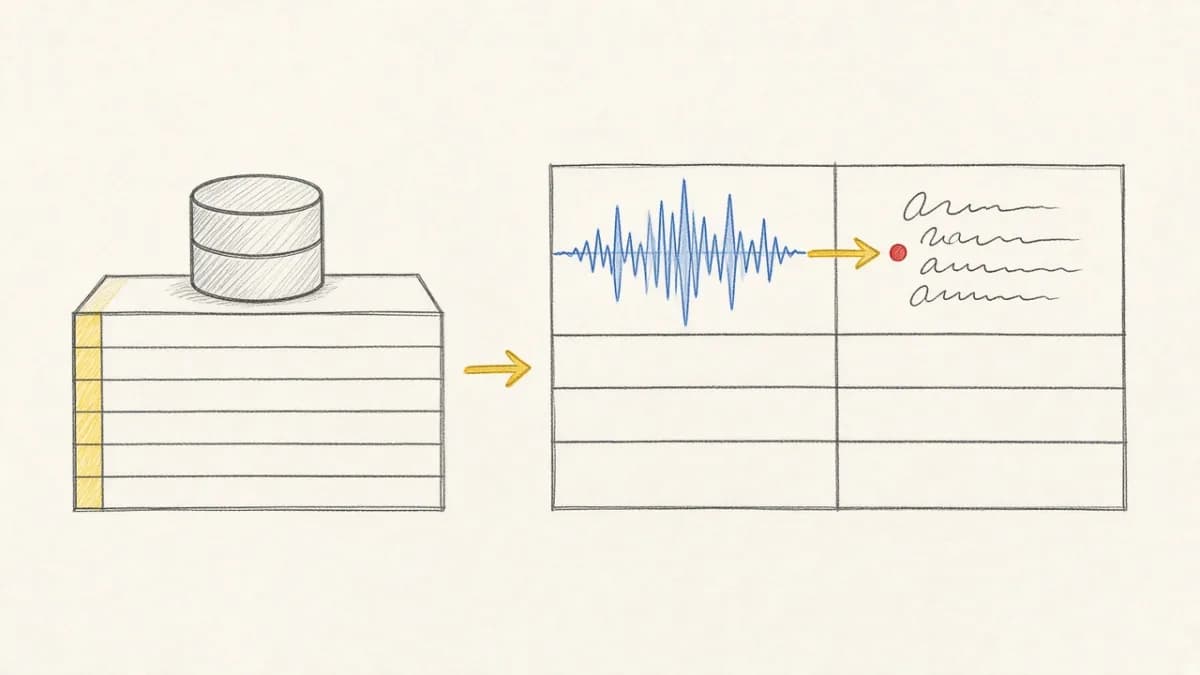
You define your index once, specifying the column and the embedding function (which can generate unimodal or multimodal embeddings). Pixeltable takes full ownership of the index lifecycle, automatically keeping it perfectly synchronized with your table data. This provides true real-time vector index capabilities without the manual overhead.
Creating an Index: Define Once, Run Forever#
Creating an index remains simple. Let's revisit indexing an image column with a CLIP model for multimodal search:
The key is that this definition is stored persistently. Pixeltable now *knows* how to generate embeddings for this column and that an index depends on it.
The Magic: Effortless Synchronization#
Once the index exists, any standard data manipulation operation on the table triggers the necessary index updates automatically and incrementally:
table.insert(...): New rows are embedded using the defined function, and the new vectors are added to the index.table.update(...): If data in the indexed column (or columns its embedding depends on) changes, Pixeltable recomputes the embedding and updates the corresponding vector in the index.table.delete(...): Vectors corresponding to deleted rows are removed from the index.
Crucially, you write zero code for index maintenance. Pixeltable handles the synchronization logic, efficiently performing incremental updates rather than triggering costly global rebuilds. This avoids common issues like vector index performance degradation often seen with naive update strategies in other systems.
Example: Index Stays Fresh (From the Notebook)#
Imagine running a similarity query, inserting new data, and running the *exact same query again*:
This automatic freshness is vital for use cases demanding up-to-date information.
Leveraging the Index: Semantic & Multimodal Search#
Querying uses the intuitive .similarity() function, enabling powerful semantic search:
And thanks to multimodal models like CLIP, you can perform cross-modal search:
Benefits: Simplicity, Freshness, Efficiency#
Pixeltable's automatic, incremental index maintenance delivers tangible benefits:
- Always Fresh Data: Ensures your AI applications operate on the most current information, critical for incremental RAG knowledge base updates, real-time recommendations, and accurate analysis.
- Eliminate Rebuild Costs: You completely avoid vector index rebuild cost and the associated downtime or resource spikes.
- Operational Simplicity: Drastically reduces engineering effort by removing the need to build and maintain complex data synchronization pipelines.
- Improved Performance & Reliability: Incremental updates are typically far more efficient than full rebuilds, and the automatic nature reduces the risk of human error in update logic.
- Focus on Value: Frees up developers to focus on core application logic and model selection rather than data plumbing.
Build Dynamic AI on a Solid, Fresh Foundation#
Don't let stale data or complex index maintenance pipelines hinder your AI development. Pixeltable provides a robust, efficient foundation with its dynamic vector index capabilities, automatically ensuring data freshness through seamless incremental updates.
Build faster, more reliably, and focus on creating intelligent applications.
Explore the capabilities yourself: