The Bottleneck: Wrestling with Traditional Data Pipelines#
In today's AI landscape, developers often find themselves spending more time battling complex data pipelines than building innovative AI solutions. As companies race to integrate multimodal AI capabilities (from LLMs processing text to computer vision models analyzing images and video), the complexity of managing data transformations, model inference, and versioning has reached a breaking point. This is where a new paradigm emerges: AI Functions.
The Problem with Pipelines in the AI Era#
Traditional data pipelines, often built with sequential scripts and disparate tools, weren't designed for the dynamic and iterative nature of modern AI development. They typically struggle with:
- Complex Data Types: Efficiently managing video frames, audio clips, large documents, embeddings, and structured metadata requires intricate custom code and specialized storage.
- Costly Recomputations: Minor changes to source data, processing logic, or a model version often trigger full, expensive dataset reprocessing, hindering rapid iteration.
- Lost Lineage: Tracing a model's prediction or an LLM's response back through the pipeline to the specific source data and processing steps used becomes a difficult, time-consuming detective mission.
- Development-Production Gap: Code and workflows developed locally often require significant refactoring, optimization, and infrastructure changes to run reliably and efficiently in production.
These challenges force teams to invest heavily in building and maintaining brittle infrastructure, diverting focus from their primary goal: AI model development and application innovation.
Introducing AI Functions: A Declarative Revolution#
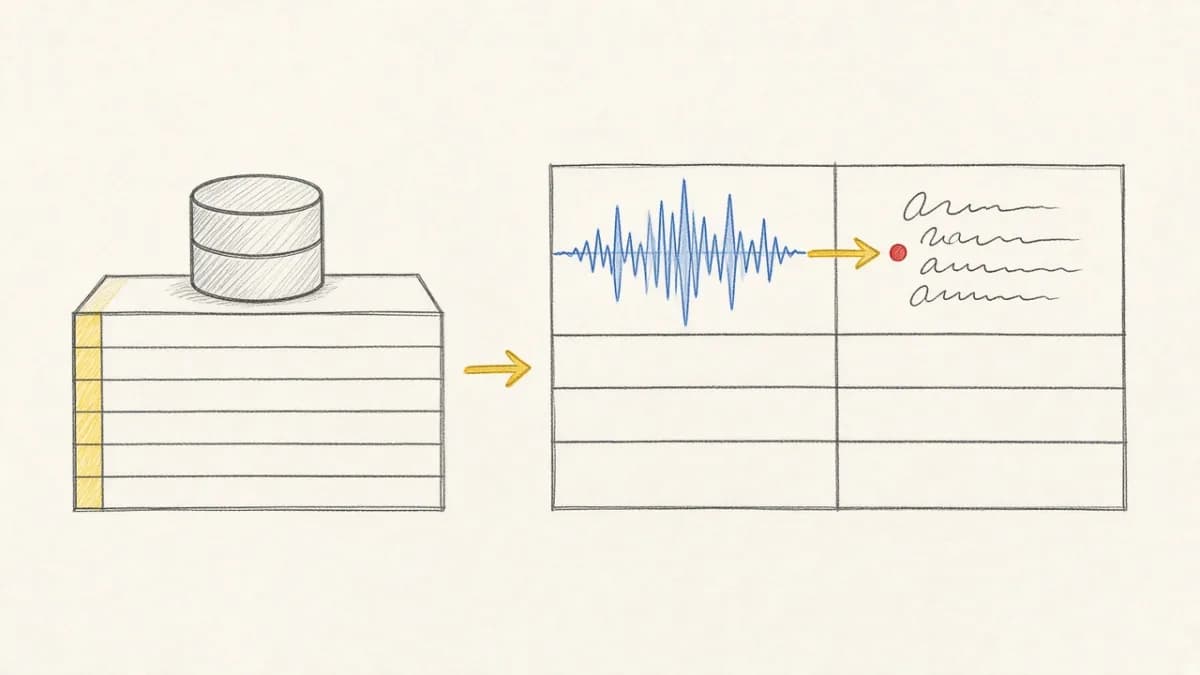
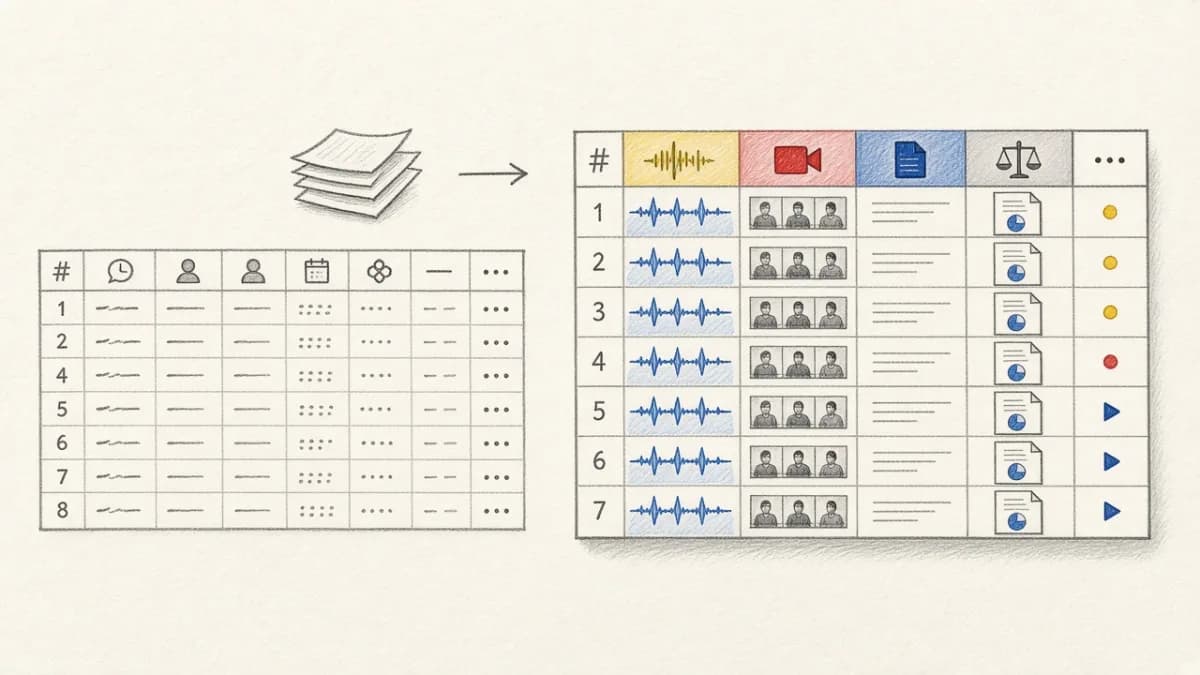
AI Functions represent a fundamental shift. Instead of imperatively defining how data should flow through a series of steps, developers declaratively define what computations should happen using functions that operate directly on data structures like tables and views. Pixeltable is built around this concept.
Think of AI Functions as operations (like feature extraction, model inference, data transformation) applied as computed columns or transformations within a data management system that understands AI workloads.
AI Functions in Action: Pixeltable Example (Video Processing)#
Consider processing videos to detect objects in frames. Compare the traditional approach with Pixeltable's AI Function approach:
Traditional Pipeline (Conceptual Python):
With Pixeltable AI Functions:
This concise definition handles the entire workflow, including incremental updates. You can similarly apply functions for video similarity search using embeddings.
Why This Changes Everything#
The difference is more than just lines of code. The Pixeltable (AI Functions) approach fundamentally changes the workflow:
- Eliminates Boilerplate: No need to manually manage frame extraction loops, data loading, storage, caching, or basic error handling.
- Updates Incrementally: Pixeltable automatically processes only new or changed data. Update a video? Only its frames are reprocessed. Add a video? Only that video is processed.
- Maintains Lineage: Every computed value (like detections) has a traceable lineage back to the input data (frame) and the function (pxt.functions.vision.yolox) used.
- Works Everywhere: The same declarative code defines the workflow in development, staging, and production environments.
Real-World Impact & Benefits#
Teams adopting Pixeltable and the AI Function paradigm report significant improvements:
- Compute Cost Reduction: Often 70% or more saved by avoiding unnecessary recomputations through incremental processing.
- Reduced Maintenance Time: Up to 90% less time spent building, debugging, and maintaining complex pipeline code.
- Faster Iteration: Quickly swap models or adjust parameters by changing the AI Function; Pixeltable handles the updates efficiently.
- Consistency & Reproducibility: Built-in lineage and versioning ensure results are understandable and reproducible.
- Focus on Innovation: Engineers spend more time on core AI logic and less on infrastructure plumbing.
Beyond Basic Transformations: Multimodal & RAG#
The power of AI Functions extends to complex, multi-stage, and multimodal workflows:
Multimodal Processing (Video -> Audio -> Transcript -> Summary):
RAG Applications (Document Chunking, Embedding, Indexing):
The Future is Declarative#
As AI becomes more deeply integrated into applications, the need for simplified, maintainable, and efficient AI workflows is paramount. AI Functions, as implemented in Pixeltable, represent more than just a technical improvement. They enable a new generation of complex AI applications that would be impractical or prohibitively expensive to build and maintain using traditional pipeline approaches.
Getting Started with AI Functions in Pixeltable#
Transitioning doesn't require an overnight switch. Teams can start incrementally:
- Identify a bottleneck or a complex pipeline causing maintenance headaches.
- Model that workflow in Pixeltable using tables, views, and AI functions (computed columns).
- Measure the impact on development velocity, compute costs, and maintainability.
- Gradually expand the use of Pixeltable to other workflows.
Conclusion: Embrace the Shift#
The rise of AI Functions marks a turning point. By abstracting the complexity of data orchestration, they allow teams to focus on building value, not infrastructure. The future of AI development is declarative, efficient, and focused on outcomes.
Ready to transform your AI workflows?
- Try Pixeltable on GitHub
- Check out the Getting Started Guide
- AI Transformations Belong in the Schema: why computed columns replace pipeline orchestration
- Join our Discord Community