The Excitement vs. The Reality of AI Agents#
Developing AI agents is exciting. Recent advancements like OpenAI's Agents SDK and Google's Agent Development Kit (ADK) offer valuable primitives for agent orchestration. Yet, deploying these agents reliably in production often reveals significant, time-consuming infrastructure hurdles.
Introducing Pixelagent: Build Agents, Not Plumbing#
Today, we're thrilled to introduce Pixelagent – a data-first agent engineering blueprint designed to cut through this complexity.
Pixelagent isn't another orchestration framework trying to own your entire stack. It's a collection of clear patterns and examples built directly on Pixeltable, our declarative AI data infrastructure. It provides the blueprint for agent storage and state management, giving you the freedom to focus on agent intelligence and use your preferred orchestration logic (ReAct, etc.).
Why is Agent Infrastructure So Hard?#
Engineers building sophisticated agents, especially multimodal ones, quickly find themselves battling deep infrastructure problems that orchestration SDKs alone don't solve:
- Infrastructure Sprawl: Juggling separate systems for vector search, state tracking, multimodal data handling, and monitoring leads to fragmented workflows and high operational costs.
- State Management Nightmares: Reliably tracking agent memory, tool calls, and intermediate states across potentially long-running, asynchronous tasks is incredibly difficult.
- Multimodal Integration Pain: Integrating and processing images, audio, video, and documents alongside text requires specialized, often disparate, tooling.
- Observability Gaps: Understanding why an agent made a decision or failed requires deep visibility into its state and data lineage, which is often lacking.
- Framework Lock-in: Committing to a specific orchestration framework can limit flexibility and make it hard to adapt or integrate best-of-breed components.
As one engineering lead aptly put it:
We spent 4 months just building the infrastructure... The agent logic itself took two weeks. The real challenge often lies underneath the orchestration layer.
The Pixeltable Foundation: Declarative AI Data Infrastructure#
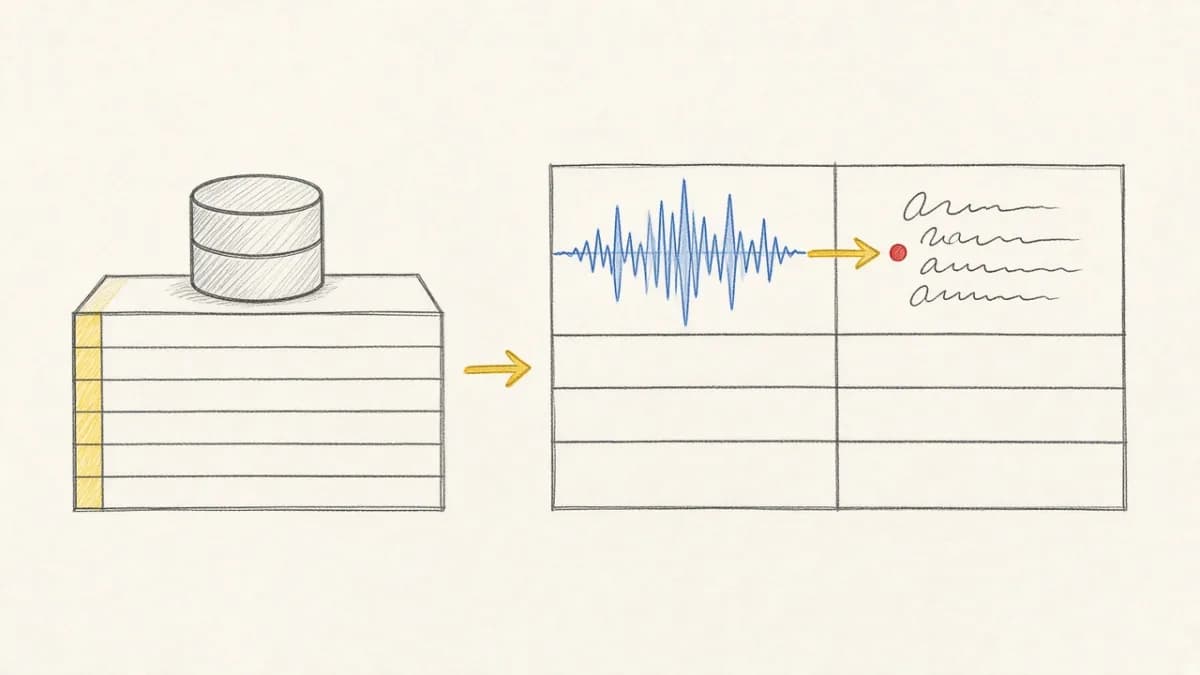
Just as relational databases provide a declarative table interface that abstracts away complex storage and querying, Pixeltable provides the declarative data infrastructure layer specifically designed for AI.
Pixeltable unifies storage, computation, and models behind a simple, Pythonic table interface. You define what data transformations you need (like extracting audio, running object detection, generating embeddings, or tracking agent memory), and Pixeltable handles the complex underlying infrastructure: persistence, versioning, indexing, caching, error handling, and incremental updates across multimodal data.
The Pixelagent Approach: Key Features#
By leveraging Pixeltable, Pixelagent enables:
- Data-Centric Reliability: Utilizes Pixeltable for robust state management, multimodal data handling, and persistence.
- Framework Agnostic: Provides building blocks, not rigid structures. Integrate your preferred orchestration patterns.
- Multimodal Native: Inherits Pixeltable's seamless handling of text, images, video, and audio.
- Declarative & Pythonic: Define agent components like memory and tools using Pixeltable's simple interface.
- Extensible: Clear examples for adding memory, tools, reflection, reasoning, and multi-provider support.
Example: Agent with Tools#
Building an agent with custom tools becomes straightforward:
Key Capabilities in Action#
Beyond the basic tool usage, Pixelagent and Pixeltable work together to handle core agent requirements like state management and enable advanced patterns.
Simple Chat & Persistent Memory#
Even the simplest agent benefits from Pixeltable's automatic state persistence. Chat history is stored automatically.
Unlimited Memory#
By default, agents retain a limited chat history for performance. You can easily configure agents to remember everything by setting n_latest_messages to None.
Advanced Patterns: ReAct Looping#
Pixelagent's foundation allows you to build complex agentic loops, like the ReAct (Reasoning + Acting) pattern, on top. Pixeltable manages the state across loop iterations.
Build Your Own Agent#
Pixelagent provides step-by-step guides to construct agent foundations for Anthropic Claude and OpenAI GPT models, plus examples for multi-provider setups and advanced patterns like Memory, Reasoning (ReAct), and Reflection.
Ready to Build Better Agents?#
Stop wrestling with fragmented infrastructure and framework limitations. Build your next generation of AI agents on a solid data foundation designed for multimodal data and reliable state management.
Explore the Pixelagent blueprint, leverage Pixeltable's declarative power, and focus on what truly matters: building intelligent, capable AI agents.
Get Started: