AI Agents Need More Than Text: The Multimodal Gap#
Watch an AI coding assistant work for five minutes and you'll notice something: they're brilliant at generating code, refactoring logic, and explaining concepts. But ask them to help with video processing, image analysis, or building multimodal AI applications? They hit a wall.
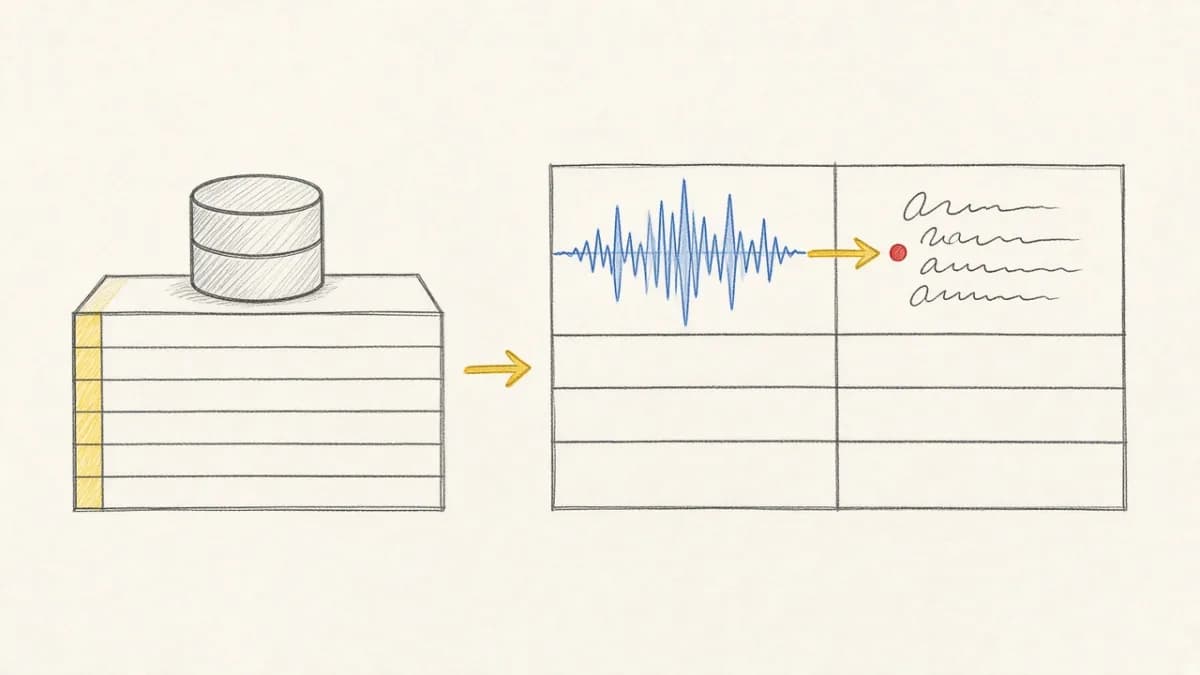
The problem isn't intelligence. It's infrastructure. AI agents need access to tools that understand multimodal data. They need to create tables that hold videos, run object detection on images, transcribe audio files, and build semantic search indexes. All through natural conversation.
"I want Claude to help me build a video analysis pipeline. Can you make that table for my screenshots and add object detection? Oh, and transcribe the audio files while you're at it."
This should just work. Now it does.
Introducing Pixeltable MCP Server: Multimodal AI Infrastructure, Meet Your AI Assistant#
Today we're launching the Pixeltable MCP Server (Developer Edition), the first Model Context Protocol server that brings unified multimodal AI infrastructure to conversational AI assistants like Claude and Cursor.
Through natural language, your AI assistant can now:
- Create multimodal tables for videos, images, audio, and documents
- Run AI models like YOLOX object detection and Whisper transcription
- Build semantic search with automatic embedding generation and indexing
- Execute Python code in a persistent REPL with Pixeltable pre-loaded
- Discover functionality through interactive exploration and introspection
This isn't just another MCP server. It's declarative multimodal infrastructure accessible through conversation.
What Is MCP? And Why It Changes Everything#
The Model Context Protocol (MCP) is an emerging open standard that allows AI assistants to securely access external tools and data sources. Think of it as a universal API that lets Claude, Cursor, and other AI agents interact with specialized services.
Before MCP, AI assistants were isolated from your development tools. They could generate code, but they couldn't actually run it. They could suggest database schemas, but they couldn't create them. They operated in a text-only world.
MCP changes this by giving agents agency: the ability to take action, not just suggest it.
The MCP Revolution for Developers#
Microsoft recently announced plans to integrate Anthropic's MCP directly into Windows. GitHub's Copilot is evolving toward agentic capabilities. The industry is converging on a simple truth: AI agents need standard protocols to interact with development tools.
Our Pixeltable MCP Server positions you at the forefront of this shift, bringing declarative multimodal infrastructure into this new agentic paradigm.
What Pixeltable MCP Enables: Conversational Multimodal AI#
Here's what becomes possible when your AI assistant has access to Pixeltable's multimodal infrastructure:
Natural Language Data Workflows#
Interactive Python REPL#
The MCP server includes a persistent Python REPL with Pixeltable pre-loaded, enabling real-time exploration:
This isn't just code execution. It's conversational infrastructure management. Your AI assistant becomes a collaborative partner who can discover, explore, and manipulate your multimodal data infrastructure in real-time.
Intelligent Bug Logging and Discovery#
Building experimental infrastructure means discovering bugs. The MCP server includes structured logging to help you track issues systematically:
All logs are saved in pixeltable_testing_logs/ in both Markdown and JSON formats, creating a systematic record of your development journey.
Real-World Examples: What You Can Build#
Example 1: Smart Screenshot Library#
Build an AI-powered screenshot organizer through conversation:
What would take hours of infrastructure setup becomes a five-minute conversation.
Example 2: Video Content Analysis#
Analyze a video library with natural instructions:
Example 3: Document RAG System#
Build a production-ready RAG system conversationally:
Why This Matters: Agents as Infrastructure Engineers#
The Pixeltable MCP Server represents a fundamental shift in how we build AI infrastructure. Instead of manually writing complex pipeline code, you describe what you want in natural language, and your AI assistant builds the infrastructure for you.
This isn't about replacing developers. It's about elevating them. Just as SQL freed developers from manual data manipulation, conversational infrastructure frees you from repetitive data plumbing. You focus on architecture, design, and innovation. Your AI assistant handles the mechanical implementation.
The Developer-Agent Collaboration Model#
Here's what we've learned building with and for agents:
- Agents excel at mechanical work: Creating tables, writing boilerplate, following patterns
- Developers excel at creative work: Choosing architectures, designing systems, solving novel problems
- Together, they're unstoppable: 10x faster iteration, better quality, more ambitious projects
"The developers who build with agents will replace those who don't. The Pixeltable MCP Server is the bridge between conversational AI and multimodal infrastructure."
Technical Capabilities: What's Under the Hood#
Multimodal Native Through MCP#
The MCP server exposes Pixeltable's full multimodal capabilities:
- Video Processing: Frame extraction, audio separation, temporal analysis
- Image Analysis: Object detection (YOLOX), embeddings (CLIP), vision LLM analysis
- Audio Understanding: Whisper transcription, semantic audio search
- Document Intelligence: Chunking, parsing, semantic indexing
- Cross-Modal Operations: Extract audio from video, analyze images in documents
Persistent Python REPL#
Unlike typical code execution environments, the MCP server maintains a stateful Python session:
Self-Documenting and Adaptive#
The MCP server can introspect Pixeltable's API in real-time:
- Function Discovery:
list_available_functions("pxt")reveals all capabilities - Interactive Documentation:
introspect_function("pxt.create_table")shows signatures and usage - API Evolution: As Pixeltable updates, Claude automatically learns new features
This future-proofs your assistant: as Pixeltable gains new capabilities, your agent automatically gains access to them without MCP server updates.
Getting Started: From Zero to Multimodal in 60 Seconds#
Installation is designed to be effortless, especially with Claude's help:
Easiest Way (Claude Does Everything)#
Just tell Claude:
"Install https://github.com/pixeltable/mcp-server-pixeltable-developer as a uv tool and add it to your MCPs"
Claude handles installation, configuration, and setup. That's it.
Manual Installation (Still Simple)#
Setting Up with Cursor#
Cursor users get the same multimodal capabilities:
- Open Cursor Settings → Features → Model Context Protocol
- Add new MCP server with command:
mcp-server-pixeltable-developer - Set environment variable:
PIXELTABLE_HOMEto your desired data directory
Or configure via JSON (see full configuration docs).
Real-World Use Cases: What Developers Are Building#
Local AI Development Without the Cloud#
Build complete multimodal pipelines using local models:
Research and Experimentation#
Rapidly prototype multimodal AI experiments:
"I'm experimenting with different embedding models for image search. Can you create a table with my test images, try three different embedding models (CLIP, DINOv2, and ImageBind), and compare search quality?"
Claude creates the infrastructure, runs the comparisons, and reports results. What would take a day of manual setup becomes a 10-minute conversation.
Content Management and Organization#
Organize personal media libraries with AI assistance:
Developer Edition: Early Access for Pioneers#
We're launching the Developer Edition early because we believe in building in public and learning from real developer feedback. Your experimentation helps us understand how conversational infrastructure should work and shapes the future of this tool.
Advanced Features: Built for Power Users#
Configurable Datastore Path#
Change where Pixeltable stores data through conversation:
Configuration persists across sessions and respects environment variables for flexible deployment.
Structured Testing and Feedback#
As you explore Pixeltable through the MCP server, document your discoveries:
This systematic feedback loop helps us improve Pixeltable based on real developer needs.
Why Pixeltable MCP Is Different#
There are MCP servers for databases, file systems, and APIs. What makes the Pixeltable MCP Server special?
Multimodal-First Design#
Most MCP servers handle text and structured data. Pixeltable MCP handles the full spectrum of AI data types (video, images, audio, documents) with the same conversational ease.
Declarative Infrastructure Through Conversation#
When Claude creates a Pixeltable table with computed columns, you're not just storing data. You're defining an AI workflow that runs automatically:
- Automatic Processing: New data triggers AI analysis automatically
- Incremental Updates: Only changed data gets reprocessed
- Complete Lineage: Every result traces back to source data and functions
- Versioning: Built-in time travel for experimentation without fear
Future-Proof Through Introspection#
As Pixeltable evolves, the MCP server adapts automatically. New functions appear in list_available_functions(). Updated signatures show in introspect_function(). Your AI assistant stays current without manual MCP updates.
Technical Architecture: How It Works#
For developers interested in the implementation:
MCP Tools Exposed#
- create_table: Initialize Pixeltable tables with multimodal schemas
- execute_python: Run Python code in persistent REPL session
- introspect_function: Get real-time documentation and signatures
- list_available_functions: Discover all Pixeltable capabilities
- set_datastore_path: Configure storage locations
- log_bug / log_success: Structured feedback and testing
- generate_bug_report: Export comprehensive development logs
Persistent Session Management#
The Python REPL maintains state across MCP calls, enabling:
- Multi-step workflows that build on previous commands
- Table references that persist between conversations
- Iterative development with immediate feedback
Secure Sandbox Execution#
The MCP server runs in your local environment with configurable datastore paths. Your data never leaves your machine unless you explicitly integrate external AI providers (OpenAI, Hugging Face, etc.).
Comparison: Pixeltable MCP vs Traditional Database MCPs#
| Capability | Traditional DB MCP | Pixeltable MCP |
|---|---|---|
| Data Types | Structured data only (text, numbers) | Video, Image, Audio, Document + structured |
| AI Integration | ❌ External tools required | ✅ Built-in OpenAI, Hugging Face, YOLOX, etc. |
| Vector Search | ❌ Separate vector DB needed | ✅ Built-in embedding indexes |
| Incremental Processing | ❌ Manual implementation | ✅ Automatic dependency tracking |
| Versioning | ⚠️ Basic (if any) | ✅ Complete lineage and time travel |
| Introspection | ⚠️ Static schema info | ✅ Dynamic function discovery and docs |
What's Next: The Evolution of Conversational Infrastructure#
The Developer Edition is just the beginning. Here's where we're heading:
Near-Term Improvements#
- Enhanced Error Handling: Better error messages and recovery strategies
- Visualization Support: Generate charts and previews of multimodal data
- Collaborative Features: Multi-user support for team environments
- Production Hardening: Migration from experimental to production-ready status
Long-Term Vision#
- Agentic Workflows: AI agents that manage their own data infrastructure
- Multi-Agent Coordination: Agents collaborating on complex multimodal projects
- Natural Language Schemas: "Create a table for autonomous driving sensor data" → complete schema generation
- Intelligent Optimization: Agents that suggest performance improvements
We Need Your Feedback: Building in Public#
The Developer Edition is an experiment in building infrastructure collaboratively with the community. We want your feedback on:
- What works well? Use
log_success()to document successful patterns - What's missing? Use
log_missing_feature()to suggest improvements - What's broken? Use
log_bug()to report issues systematically
Your structured feedback through the MCP server's logging tools helps us prioritize development and improve the experience for everyone.
The Philosophy: Infrastructure That Gets Out of Your Way#
We built the Pixeltable MCP Server with a core belief: infrastructure should be invisible. The best tools are the ones you stop thinking about because they just work.
When you tell Claude "create a table for my videos and add object detection," you shouldn't need to worry about:
- Storage layer configuration
- Model loading and management
- Dependency resolution and execution order
- Error handling and retry logic
- Incremental processing optimization
You declare what you want. Pixeltable handles how to make it happen. The MCP server makes this declarative power accessible through natural conversation.
Agents Don't Replace Developers: They Elevate Them#
There's a myth that AI will replace software engineers. The reality we've discovered building this MCP server is different:
Agents handle the mechanical work:
- Writing boilerplate for table creation
- Looking up function signatures and documentation
- Implementing repetitive transformations
- Managing low-level infrastructure details
Developers focus on what matters:
- Choosing the right architecture for their use case
- Designing data models that capture domain knowledge
- Making strategic decisions about AI models and approaches
- Building features that create real user value
"The Pixeltable MCP Server showed me what developer-agent collaboration really means. I designed the system architecture. Claude built the infrastructure. Together we shipped in a weekend what would have taken me weeks alone."
Get Started Today: Join the Conversational Infrastructure Revolution#
The Pixeltable MCP Server (Developer Edition) is available now. Here's how to dive in:
Quick Start Steps#
- Install uv:
curl -LsSf https://astral.sh/uv/install.sh | sh - Install MCP Server:
uv tool install --from git+https://github.com/pixeltable/mcp-server-pixeltable-developer.git mcp-server-pixeltable-developer - Configure Claude/Cursor: Add the MCP server to your AI assistant
- Start Building: Tell your assistant "Create a table for my images"
Learning Resources#
- GitHub Repository - Full documentation and source code
- Pixeltable Core Concepts - Understand the underlying platform
- Declarative Multimodal Infrastructure - Learn the philosophy
- Building Multimodal AI Apps - See what's possible
- Model Context Protocol - Understand MCP standard
Join the Community: Building Together#
The Pixeltable MCP Server is an experiment in collaborative development. We're building this with the community, not just for it:
- Join our Discord - Share your MCP experiments and get help
- Report Issues - Help us improve through GitHub issues
- Explore Pixeltable - Dive deeper into the core platform
- Share Your Builds: Show us what you create with conversational infrastructure
Conclusion: The Future Is Conversational#
We're witnessing a fundamental shift in how software gets built. The future isn't about replacing developers with AI. It's about developers collaborating with AI to build things that were previously impossible or impractical.
The Pixeltable MCP Server represents this future: multimodal AI infrastructure accessible through natural conversation. No complex setup, no steep learning curves, no data plumbing nightmares. Just describe what you want, and your AI assistant makes it happen.
This is experimental. This is rough around the edges. This is the beginning of something transformative.
The developers who embrace conversational infrastructure today will be the ones building the impossible tomorrow. The question isn't whether agents will change software development. They already have. The question is whether you'll be part of shaping how.
Install the Pixeltable MCP Server. Give Claude multimodal superpowers. Build something amazing. Then tell us what you learned.
The future of AI infrastructure is conversational. Let's build it together. 🚀
Start Your Multimodal MCP Journey#
- Pixeltable MCP Server Repository - Installation and documentation
- Pixeltable Core Platform - Explore the underlying infrastructure
- Your First Pixeltable Project - Learn the fundamentals
- Pixeltable MCP Ecosystem - Other MCP servers for multimodal AI
- Interactive Playground - Try Pixeltable in your browser
- Discord Community - Connect with other developers
Built while having coffee. ☕ Refined through community collaboration. Designed for the age of AI agents.