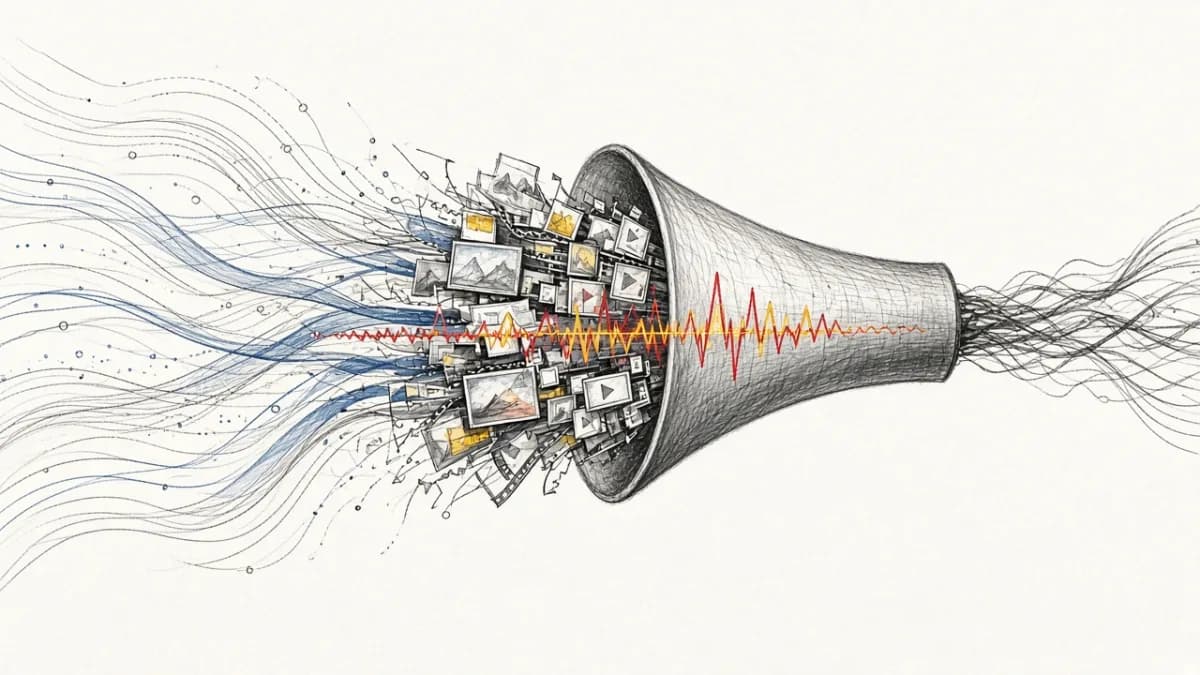
The Multimodal Data Revolution: Why Traditional Tools Don't Cut It#
If you're building modern AI applications, you've probably tried to wrangle video files in pandas. Maybe you've attempted to process thousands of images or handle audio transcripts alongside tabular data. How did that work out for you?
The reality is stark: pandas and Polars excel at structured data but become painful for multimodal AI workflows. While these tools revolutionized tabular data analysis, they weren't designed for the fundamental challenge of modern AI development: seamlessly working with video, images, audio, documents, and the complex relationships between them.
This post explores why traditional data wrangling tools hit a wall with multimodal data and how Pixeltable's native multimodal approach transforms data curation, augmentation, and analysis for AI teams.
Where Pandas and Polars Hit the Wall#
Pandas and Polars are phenomenal for structured data analysis. But try to process a video with them, and the limitations become immediately apparent:
No Native Multimodal Support#
Neither pandas nor Polars understands what a video, image, or audio file actually is. They see file paths as strings and leave all the complexity to you:
No AI Integration#
Want to run a computer vision model on your images? Transcribe audio? Generate embeddings? You're writing custom functions and managing model calls manually:
No Incremental Processing#
Add new data to your pandas DataFrame? Everything gets reprocessed. Change a processing function? Start from scratch. There's no understanding of data dependencies or incremental computation.
No Versioning or Lineage#
How was this embedding generated? Which model version created this transcript? Pandas and Polars have no concept of data lineage or versioning - you're managing this complexity manually.
Pixeltable: Multimodal Data as First-Class Citizens#
Pixeltable was built from the ground up for the age of multimodal AI. Instead of treating media as foreign objects that need custom handling, Pixeltable natively understands video, images, audio, and documents as first-class data types.
Native Multimodal Types#
In Pixeltable, multimodal data types are as natural as integers and strings:
Automatic AI Processing with Computed Columns#
Want to transcribe audio, analyze images, or extract video frames? Define it once, and Pixeltable handles the execution automatically:
Side-by-Side: Traditional vs. Pixeltable Approach#
Let's compare how you'd build a common multimodal workflow - analyzing a video library with frame extraction, object detection, and semantic search.
The Pandas/Polars Approach: Manual Everything#
The Pixeltable Approach: Declarative Multimodal Wrangling#
Capability-by-Capability Comparison#
| Capability | Pandas/Polars | Pixeltable |
|---|---|---|
| Video Processing | Manual FFmpeg/OpenCV integration | Native Video type with built-in frame extraction |
| Image Analysis | Custom PIL/OpenCV workflows | Native Image type with AI function integration |
| Audio Processing | Manual librosa/soundfile handling | Native Audio type with transcription functions |
| AI Model Integration | Manual API calls and error handling | Built-in OpenAI, Hugging Face, 20+ providers |
| Incremental Updates | ❌ Full reprocessing required | ✅ Automatic incremental computation |
| Data Lineage | ❌ Manual tracking required | ✅ Automatic versioning and lineage |
| Vector Search | Separate vector database required | Built-in embedding indexes |
| Error Handling | Custom try/catch logic | Automatic retry and graceful failure |
Advanced Multimodal Data Wrangling with Pixeltable#
Cross-Modal Operations#
Pixeltable excels at operations that span multiple modalities - something nearly impossible with traditional tools:
Intelligent Data Curation Workflows#
Build sophisticated data curation pipelines that would require hundreds of lines of pandas code:
Real-World Multimodal Data Scenarios#
Content Moderation Pipeline#
Building a content moderation system that handles images, videos, and text requires complex orchestration with traditional tools:
Research Dataset Creation and Annotation#
Creating labeled datasets for machine learning research with traditional tools requires complex manual coordination:
Performance Advantages for Large-Scale Data#
Incremental Computation: The Game Changer#
The biggest advantage of Pixeltable over traditional tools is incremental computation. When working with large multimodal datasets, this isn't just convenient - it's transformative:
Real-world example: A computer vision team processing 10,000 videos saw their workflow time drop from 48 hours to 2 hours when switching from pandas-based processing to Pixeltable's incremental approach.
Memory Efficiency for Large Datasets#
Traditional dataframes load everything into memory. Pixeltable streams and processes data efficiently:
Advanced Data Augmentation Capabilities#
Pixeltable makes data augmentation for multimodal datasets significantly more manageable than traditional approaches:
Integration with Traditional Tools#
Pixeltable doesn't replace pandas and Polars - it complements them. When you need traditional tabular analysis, export seamlessly:
Cost and Efficiency Benefits#
Dramatic Compute Cost Reduction#
Teams report 70-90% reduction in compute costs when switching from manual pandas workflows to Pixeltable's incremental approach:
- No Redundant Processing: Only new or changed data gets processed
- Intelligent Caching: Expensive AI operations are cached automatically
- Batch Optimization: Automatic batching for optimal GPU utilization
- Dependency Tracking: Only recompute what's actually affected by changes
10x Development Velocity#
The declarative approach eliminates the majority of data wrangling boilerplate:
"We went from spending 80% of our time on data plumbing to 80% on actual AI model development. Our video analysis pipeline that took 3 months to build and maintain now takes 3 days."
When to Use What: A Decision Framework#
Use Pandas/Polars When:#
- Pure tabular analysis: Working exclusively with structured numeric/text data
- Statistical modeling: Building traditional ML models with cleaned datasets
- Data visualization: Creating charts and graphs from processed data
- One-off analysis: Quick exploratory data analysis on static datasets
Use Pixeltable When:#
- Multimodal workflows: Working with video, images, audio, or documents
- AI integration: Need to apply AI models as part of data processing
- Evolving datasets: Data changes frequently and you need incremental processing
- Production systems: Building reliable, scalable AI applications
- Data lineage matters: Need to track how results were generated
- Cross-modal operations: Processing that spans multiple data types
Migration Strategy: From Pandas to Pixeltable#
Already have pandas-based multimodal workflows? Here's how to migrate incrementally:
Conclusion: The Future of Multimodal Data Wrangling#
While pandas and Polars remain excellent tools for structured data analysis, the future of data science is multimodal. Modern AI applications demand infrastructure that understands the complexity of video, images, audio, and documents as naturally as handling numbers and text.
Pixeltable represents this evolution: a platform built specifically for the multimodal AI era that handles the complexity of diverse data types while providing the automation, incremental processing, and lineage tracking that production AI systems require.
The choice isn't between abandoning your existing tools - it's about using the right tool for the right job. When your workflow involves multimodal data, AI processing, or evolving datasets, Pixeltable provides capabilities that traditional data wrangling tools simply can't match.
Ready to experience the difference? Start with a simple multimodal workflow and see how Pixeltable transforms your data wrangling from manual orchestration to declarative simplicity.
Start Your Multimodal Data Journey#
- Your First Pixeltable Project - Build a smart image organizer in 10 minutes
- Try Pixeltable on GitHub - Open source and ready to use
- Learn Pixeltable Core Concepts - Understand declarative AI infrastructure
- Building Multimodal Applications Guide - Comprehensive development tutorial
- Interactive Playground - Try Pixeltable in your browser
- Join our Discord Community - Connect with other developers