AWS Bedrock provides enterprise-grade access to foundation models from Anthropic, Meta, Amazon, and others through a unified API. Combined with Pixeltable, you can build secure, scalable AI applications that leverage your existing AWS infrastructure and security posture.
AWS Bedrock: Enterprise Foundation Models#
AWS Bedrock is Amazon's fully managed service for accessing foundation models. It offers unique advantages for enterprises already invested in AWS:
- Unified Access: Multiple model providers through a single API
- Enterprise Security: VPC endpoints, IAM integration, data encryption
- Compliance: HIPAA, SOC, GDPR-ready infrastructure
- No Data Training: Your data is never used to train models
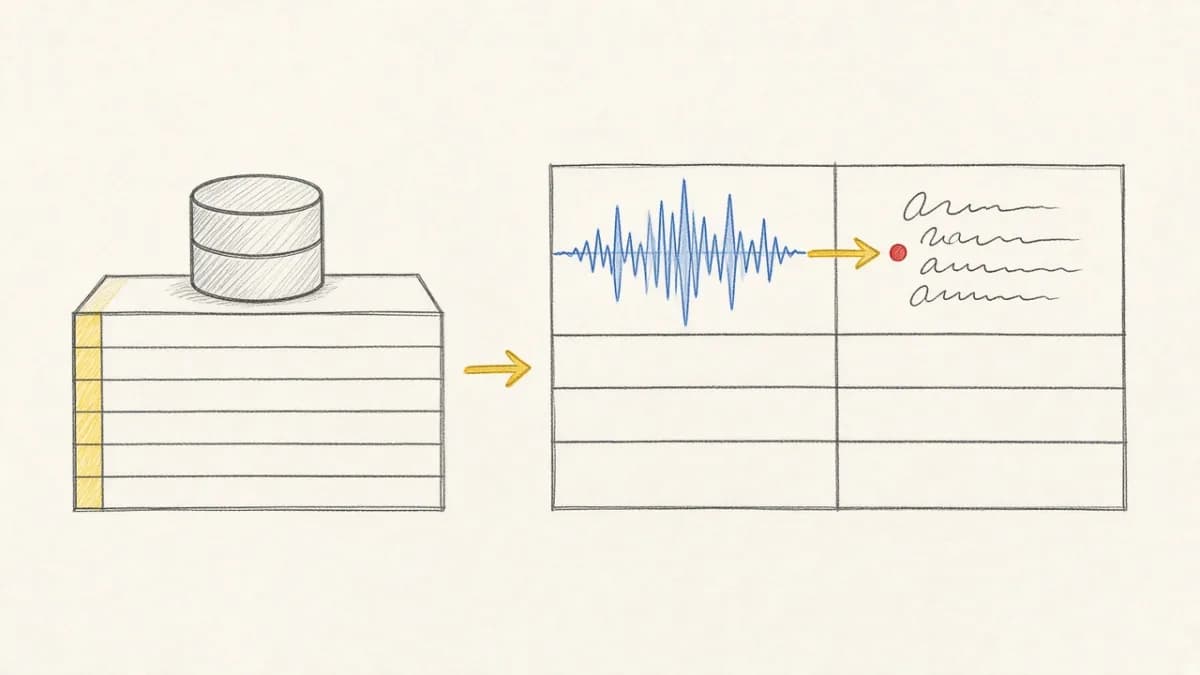
When combined with Pixeltable's declarative infrastructure, you get the best of AWS security with powerful data orchestration, incremental processing, and complete lineage tracking.
Available Models#
Anthropic Claude (via Bedrock)#
- Claude 3.5 Sonnet: Best balance of intelligence and speed
- Claude 3 Opus: Most capable for complex reasoning
- Claude 3 Haiku: Fast and cost-effective
Amazon Nova#
- Amazon Nova Pro: High-performance multimodal model
- Amazon Nova Lite: Cost-effective for simpler tasks
- Amazon Nova Micro: Ultra-fast text generation
Meta Llama#
- Llama 3.2: Latest open-weight model with multimodal support
- Llama 3.1 405B: Largest open model available
Getting Started#
Prerequisites#
- Activate Bedrock in your AWS account
- Request access to your desired models (e.g., Claude Sonnet 3.5, Amazon Nova Pro)
- Configure AWS credentials
Basic Chat with Bedrock#
Using Amazon Nova Pro for chat completions:
Building Tool-Based Agents#
Bedrock supports tool/function calling for building sophisticated agents:
Using Claude via Bedrock#
Access Anthropic's Claude models with AWS security:
Bedrock Model Comparison#
| Model | Best For | Context | Cost Tier |
|---|---|---|---|
| Claude 3.5 Sonnet | Complex reasoning, coding | 200K | $$ |
| Claude 3 Haiku | Fast, simple tasks | 200K | $ |
| Amazon Nova Pro | Multimodal, general purpose | 300K | $$ |
| Amazon Nova Lite | Cost-effective batch | 300K | $ |
| Llama 3.2 90B | Open-weight alternative | 128K | $$ |
Bedrock vs Direct APIs#
| Consideration | AWS Bedrock | Direct Provider APIs |
|---|---|---|
| Security | AWS IAM, VPC, encryption | Varies by provider |
| Compliance | HIPAA, SOC, FedRAMP | Provider-dependent |
| Billing | Consolidated AWS billing | Multiple accounts |
| Multi-Provider | Single API | Different SDKs |
| Latest Models | Slight delay | Day-one access |
Best Practices#
Cost Management#
- Use provisioned throughput: For predictable workloads
- Choose appropriate models: Nova Lite for simple tasks, Sonnet for complex
- Leverage Pixeltable caching: Automatic result caching reduces API calls
- Monitor with CloudWatch: Track usage and costs
Error Handling#
- Throttling: Pixeltable's rate limiting handles this
- Model access: Ensure models are enabled in your region
- Quota limits: Request increases for production workloads
Next Steps#
You've learned how to build enterprise AI applications with AWS Bedrock and Pixeltable. Explore more:
- Build AI Agents: Agent Development Guide
- Compare Providers: Multi-Provider Strategy
- Production RAG: RAG Best Practices
- All Integrations: Ecosystem Overview