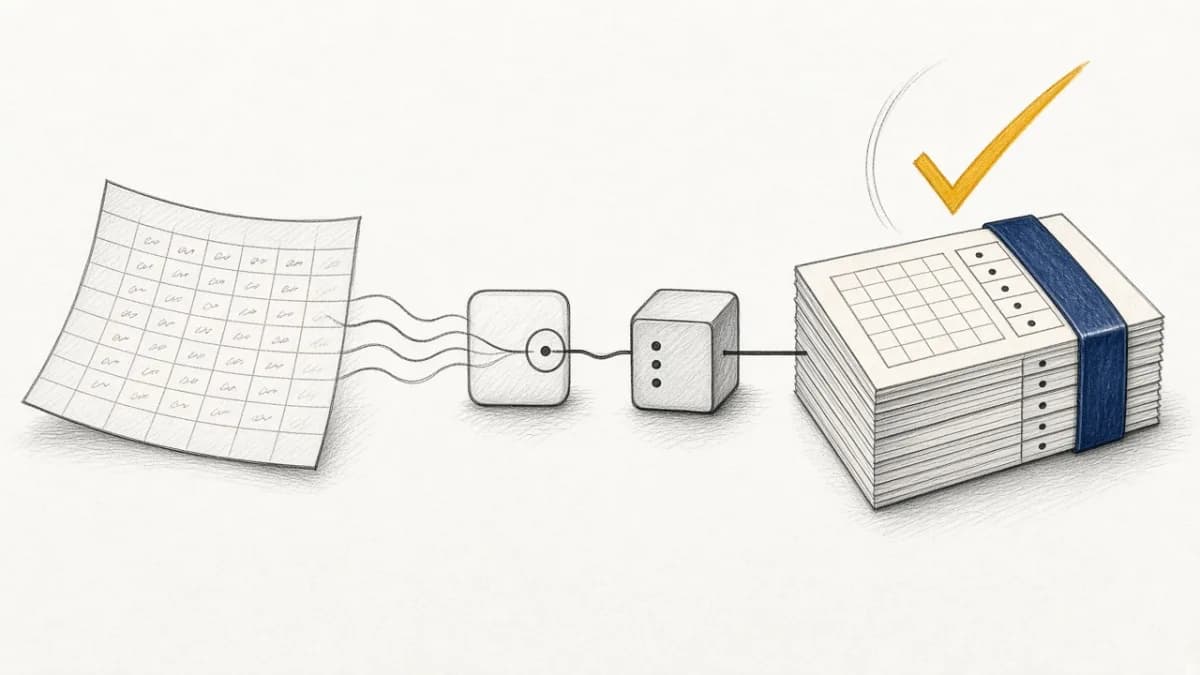
The Training Engineer's Dilemma: Drowning in Data Preparation#
Meet Marcus, a Training Infrastructure Engineer at a computer vision startup. His job should be optimizing model architectures, experimenting with training techniques, and pushing the boundaries of AI performance. Instead, he spends 2+ weeks of every month hunting through data lakes, manually preparing training sets, and recreating datasets because someone lost track of which version was used for "that good model from three months ago."
Marcus represents a critical but overlooked role in AI organizations: the engineers responsible for bridging the gap between raw data and trained models. While data scientists prototype and ML engineers prepare data, training engineers make it all work at scale. When their workflows break, entire AI initiatives grind to a halt.
"I became a training engineer to push the limits of AI models. Instead, I'm a data archaeologist, spending weeks digging through storage systems trying to recreate training conditions that worked before." (Marcus, Training Infrastructure Engineer)
The Training Infrastructure Reality: A System Built on Sand#
Marcus's current workflow spans multiple disconnected systems, each adding complexity and potential failure points:
1. Data Discovery Nightmare#
Current Tools: DVC + MLflow + custom metadata tracking + spreadsheets
- Data scattered everywhere: Raw videos in S3, annotations in Label Studio exports, metadata in PostgreSQL
- No unified view: Can't see which data has been annotated, quality checked, or previously used
- Manual correlation: Writing custom scripts to link raw data with processed results
- Version confusion: "dataset_v2_final_ACTUALLY_FINAL.parquet" in production
2. Dataset Preparation Hell#
Current Tools: Custom Python scripts + Pandas + PyTorch DataLoader + manual quality checks
3. Experiment Tracking Chaos#
Current Tools: MLflow + Weights & Biases + custom logging + manual documentation
- Lost lineage: Can't trace model performance back to specific source data
- Irreproducible results: "This model worked great, but we can't remember the exact dataset"
- Manual tracking: Spreadsheets documenting which dataset versions were used when
- Broken experiment history: Model artifacts separated from training data
The Hidden Cost of Training Infrastructure Chaos#
Massive Time Waste#
- Dataset preparation: 2-3 weeks per training experiment
- Data hunting: "Find all highway fog scenes" takes days
- Manual validation: Hours checking data quality before training
- Debugging failures: Tracking down data pipeline issues across systems
Compute Cost Explosion#
- Redundant processing: 70% of training budget on unchanged data
- Failed experiments: Discovering data issues after expensive training runs
- GPU idle time: Waiting for manual dataset preparation
- Storage costs: Multiple copies of processed data across tools
Model Quality Compromises#
- Suboptimal data selection: Using available data instead of best data
- Inconsistent preprocessing: Different team members use different pipelines
- Lost improvements: Can't reproduce successful preprocessing steps
- Delayed feedback: Annotation quality issues discovered too late
Marcus's Pixeltable Transformation: From Weeks to Hours#
After implementing Pixeltable, Marcus's workflow transforms from a multi-week manual process into an automated, traceable system. Here's his new Tuesday afternoon routine:
Step 1: Instant Data Discovery (10 minutes)#
Marcus inherits the unified dataset that Sarah (ML Engineer) has already prepared:
Step 2: Quality-Based Dataset Filtering (15 minutes)#
Instead of manual quality checks, Marcus applies declarative filters:
Step 3: Seamless PyTorch Export with Lineage (20 minutes)#
Marcus exports to PyTorch while maintaining complete traceability:
Step 4: Model Training with Automatic Lineage (15 minutes setup)#
Marcus connects his training results back to the exact source data:
Before vs. After: A Training Engineer's Transformation#
Data Preparation: Weeks to Hours#
Before Pixeltable: 2-3 Week Manual Process
- Week 1: Hunt through S3 buckets and databases to find relevant data
- Week 2: Manually correlate videos with sensor metadata and annotations
- Week 3: Debug data quality issues and create custom PyTorch dataset
- Result: Fragile dataset that breaks when requirements change
After Pixeltable: 1 Hour Automated Process
- 10 minutes: Query unified data with complex filters
- 15 minutes: Apply quality thresholds and balance dataset
- 20 minutes: Export to PyTorch with automatic lineage
- 15 minutes: Create immutable snapshots and link to experiments
- Result: Production-ready dataset with complete provenance
Experiment Reproducibility: Lost to Found#
Before: "Which dataset created our best highway model?"
After: Instant experiment reconstruction
Advanced Training Workflows Made Simple#
Intelligent Dataset Balancing#
A/B Testing and Model Comparison#
Integration Benefits: Works with Your Existing Stack#
Native PyTorch Integration#
Pixeltable doesn't replace PyTorch. It makes it better:
MLflow and Experiment Tracking Integration#
Transformation Metrics: Marcus's New Reality#
Development Velocity Gains#
- Dataset creation time: 2-3 weeks → 1 hour
- Experiment setup time: 2 days → 30 minutes
- Data quality validation: 1 day → automatic
- Reproducibility: Manual archaeology → instant reconstruction
Cost Optimization#
- Compute costs: 70% reduction from eliminating redundant processing
- Storage costs: 60% reduction from unified data management
- Engineering time: 90% reduction in data preparation overhead
- GPU utilization: 40% → 85% by eliminating data prep bottlenecks
Model Quality Improvements#
- Training data quality: Systematic quality filters vs. manual selection
- Dataset balance: Intelligent sampling vs. whatever's available
- Experiment reproducibility: 100% reproducible vs. 20% reproducible
- Faster iteration: 5x more experiments per month
"We went from 2-3 experiments per quarter to 2-3 experiments per week. Our model performance has improved dramatically because we can actually iterate and test ideas." (Marcus)
Common Training Engineer Scenarios Solved#
Rapid Model Architecture Experimentation#
Incremental Dataset Improvement#
Team Collaboration: From Silos to Synergy#
Marcus's transformation enables better collaboration across the entire ML organization:
Cross-Team Workflows#
- Data Scientists: Can instantly access any dataset version Marcus has created
- ML Engineers: See exactly which data is prioritized for annotation
- Annotation Teams: Get pre-prioritized, high-value data automatically
- Model Engineers: Access training datasets with complete provenance
Knowledge Sharing and Best Practices#
Getting Started: Transform Your Training Infrastructure#
Step 1: Audit Your Current Process#
Honestly assess where your training infrastructure stands:
- How long does dataset preparation take for each experiment?
- Can you reproduce your best model from 6 months ago?
- What percentage of training time is wasted on data prep vs. model improvement?
- How often do data quality issues derail training experiments?
Step 2: Implement a Training Pipeline Pilot#
Start with one training workflow and measure the transformation:
Step 3: Scale Based on Pilot Results#
Use concrete metrics to justify broader adoption:
- Time savings: Document exact hours saved per experiment
- Reproducibility gains: Test ability to recreate pilot experiments
- Cost analysis: Calculate compute savings from incremental processing
- Quality improvements: Compare model performance on Pixeltable vs. manual datasets
Conclusion: From Data Archaeology to Model Innovation#
Marcus's transformation from manual dataset archaeology to automated training pipeline represents the future of training infrastructure. When training engineers can focus on model architecture, hyperparameter optimization, and training strategies instead of data wrangling, the entire organization benefits.
The numbers speak for themselves: 90% reduction in data preparation time, 70% cost savings, and 5x more experiments per quarter. But the real transformation is qualitative: training engineers who love their jobs again because they're doing AI research, not data archaeology.
The infrastructure choices you make today determine whether your training engineers spend their time building better models or building better scripts. Choose wisely.
Transform Your Training Infrastructure Today#
- Your First Pixeltable Project - Start with a simple training pipeline
- Pixeltable Fundamentals Tutorial - Learn the core concepts
- Pixeltable Core Concepts - Understand declarative AI infrastructure
- Dependency Graph Magic - How automatic lineage tracking works
- Versioning and Time Travel - Master experiment reproducibility
- Try Pixeltable on GitHub - Open source and production-ready
- Join our Discord Community - Connect with other training engineers
Stop being a data archaeologist. Become the training engineer you were meant to be. 🚀