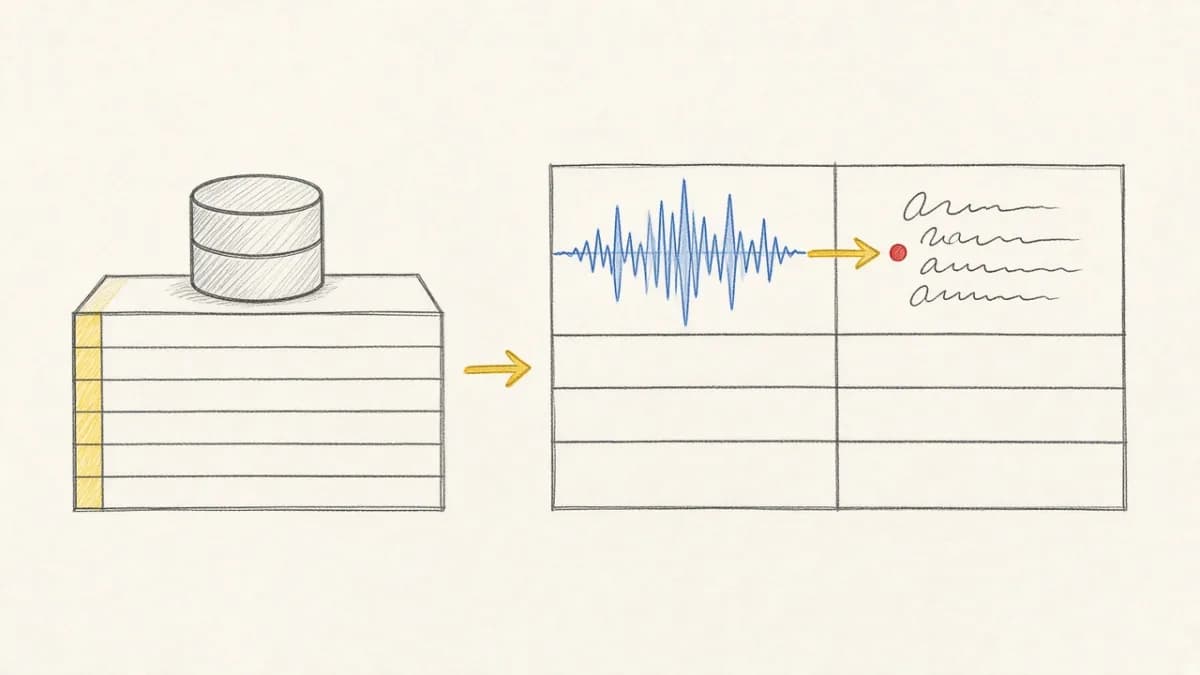
The Multimodal Annotation Landscape: Choosing Your Data Labeling Platform#
High-quality labeled data is the foundation of successful AI models. But as AI systems become increasingly multimodal (processing images, videos, audio, documents, and LiDAR simultaneously), the annotation tools landscape has evolved dramatically. Choosing the right multimodal annotation tool can be the difference between AI development velocity and annotation bottlenecks.
This comprehensive guide compares the leading AI annotation platforms for 2025, helping you understand which tool fits your specific needs. We'll examine Encord, Label Studio, Labelbox, SuperAnnotate, V7, Scale AI, and how Pixeltable serves as the unifying infrastructure that works with all of them.
Evaluation Criteria: What Matters for Multimodal Annotation#
Before comparing platforms, let's establish the key factors that matter for multimodal data labeling:
Core Capabilities#
- Data Type Support: Images, video, audio, text, 3D point clouds, LiDAR, medical imaging
- Annotation Types: Bounding boxes, polygons, keypoints, segmentation, classification, transcription
- Quality Assurance: Consensus scoring, benchmark tests, inter-annotator agreement
- Workflow Automation: Pre-annotation, AI-assisted labeling, quality checks
- Integration: API quality, SDK availability, data pipeline connectivity
Operational Factors#
- Pricing Model: Per-user, per-label, enterprise contracts
- Workforce Access: Managed labeling services vs self-service
- Scalability: Handling millions of assets across teams
- Security & Compliance: HIPAA, SOC2, data residency
Platform-by-Platform Comparison#
Encord: Active Learning Platform for Computer Vision#
Encord positions itself as an end-to-end platform for computer vision data development, with strong emphasis on active learning and model-assisted annotation.
Key Strengths#
- Active Learning Integration: Intelligent sample selection based on model uncertainty
- Multi-Modality Support: Images, video, DICOM medical imaging, 3D point clouds
- Model-Assisted Labeling: Bring your own models for pre-annotation
- Quality Metrics: Built-in consensus scoring and quality analytics
- Workflow Automation: Custom labeling workflows and automation rules
Ideal For#
- Autonomous vehicle teams needing LiDAR + camera annotation
- Medical imaging projects (DICOM support)
- Teams with existing models wanting active learning loops
- Large-scale computer vision projects requiring quality assurance
Limitations#
- Enterprise-focused pricing (may be expensive for smaller teams)
- Steeper learning curve for advanced features
- Primary focus on vision (less emphasis on NLP/audio)
Encord + Pixeltable Integration#
Label Studio: Open-Source Annotation Powerhouse#
Label Studio is the leading open-source annotation platform, offering flexibility and customization for diverse AI projects.
Key Strengths#
- Open Source: Free, self-hosted option with full control
- Extreme Flexibility: Customizable labeling interfaces for any use case
- Multi-Domain Support: Images, video, audio, text, time-series, HTML
- ML Backend Integration: Connect your models for predictions
- Active Community: Large ecosystem and regular updates
- Cloud Option Available: Managed service for teams wanting convenience
Ideal For#
- Research teams needing customization
- Organizations requiring self-hosted solutions
- Multi-domain AI projects (CV + NLP + audio)
- Budget-conscious teams willing to manage infrastructure
Limitations#
- Self-hosted version requires infrastructure management
- Advanced features require configuration
- Quality assurance features less sophisticated than commercial tools
Label Studio + Pixeltable Integration#
Labelbox: Enterprise Data-Centric Platform#
Labelbox is a comprehensive data-centric AI platform focused on quality, workflows, and enterprise features.
Key Strengths#
- Data-Centric Focus: Model-based quality metrics and diagnostics
- Managed Workforce: Access to Alignerr (formerly Labelbox workforce)
- Advanced QA: Consensus, benchmarks, LLM-as-a-judge validation
- Broad Modality Support: Image, video, text, audio, geospatial, PDF, DICOM
- Model Diagnostics: Identify model failure modes from labeled data
- Enterprise Features: SSO, RBAC, audit logs, compliance
Ideal For#
- Enterprise teams with complex quality requirements
- Organizations needing managed labeling workforce
- Projects requiring sophisticated quality assurance
- Regulated industries (healthcare, finance, autonomous vehicles)
Limitations#
- Enterprise pricing (expensive for smaller teams)
- Complexity may be overkill for simple projects
- Annual contracts typically required
SuperAnnotate: AI-Assisted Annotation Platform#
SuperAnnotate emphasizes AI assistance and collaboration, making it accessible for mid-size teams.
Key Strengths#
- AI-Assisted Labeling: Strong pre-annotation and suggestion features
- Modality Coverage: Images, video, LiDAR, text, audio
- Collaboration Tools: Team workflows, task assignment, progress tracking
- Quality Workflows: Consensus, review queues, quality metrics
- Competitive Pricing: More accessible than Labelbox or Scale AI
- Python SDK: Strong programmatic access
Ideal For#
- Growing AI teams balancing features and cost
- Computer vision and autonomous vehicle projects
- Teams wanting AI assistance without enterprise complexity
- Collaborative annotation workflows
Limitations#
- Less comprehensive than Labelbox for enterprise governance
- Managed workforce not as extensive as Scale AI
- Some advanced features only in higher tiers
V7: Darwin for Autonomous Systems#
V7 Darwin specializes in autonomous systems and robotics annotation.
Key Strengths#
- Auto-Annotation: Advanced AI models for automatic labeling
- Video Annotation: Exceptional video tracking and interpolation
- 3D Support: Point cloud and sensor fusion annotation
- Model Training Integration: Built-in model training workflows
- Workflow Orchestration: Complex multi-stage annotation pipelines
Ideal For#
- Autonomous vehicle and robotics teams
- Video-heavy annotation projects
- Teams wanting integrated training workflows
Scale AI: Enterprise Services and Software#
Scale AI combines software platform with extensive managed services, targeting large enterprises.
Key Strengths#
- Massive Workforce: Global labeling workforce at scale
- Quality Guarantee: SLA-backed quality metrics
- Domain Expertise: Specialized teams for different industries
- Generative AI Focus: RLHF, prompt engineering, LLM evaluation
- End-to-End Service: Full-service annotation including project management
Ideal For#
- Large enterprises with significant annotation budgets
- Projects requiring domain expertise (medical, legal, etc.)
- LLM training and fine-tuning projects
- Teams wanting full-service solutions
Limitations#
- Premium pricing (most expensive option)
- Less suitable for smaller teams or budgets
- Enterprise sales process
Comprehensive Feature Comparison#
| Platform | Best For | Modalities | Pricing | Workforce | Self-Hosted |
|---|---|---|---|---|---|
| Encord | Active learning, autonomous vehicles | Image, video, DICOM, 3D, LiDAR | $$$ Enterprise | Optional managed | ❌ No |
| Label Studio | Flexibility, open source, research | Image, video, audio, text, time-series, HTML | $ Free (OSS) or $$ Cloud | Self-managed | ✅ Yes |
| Labelbox | Enterprise quality, workforce, governance | Image, video, text, audio, geo, PDF, DICOM, LLM | $$$ Enterprise | ✅ Alignerr workforce | ❌ No |
| SuperAnnotate | AI assistance, mid-market teams | Image, video, LiDAR, text, audio | $$ Accessible | Optional managed | ❌ No |
| V7 Darwin | Autonomous systems, video tracking | Image, video, 3D point clouds, DICOM | $$ Mid-range | Self-managed | ❌ No |
| Scale AI | Full-service, LLM training, enterprises | All major modalities + generative AI | $$$$ Premium | ✅ Full-service | ❌ No |
Decision Framework: Choosing Your Annotation Platform#
Choose Encord When:#
- Building autonomous vehicle or robotics systems with LiDAR + vision
- Active learning is central to your data strategy
- Medical imaging (DICOM) is primary use case
- Budget allows for premium enterprise tools
- Model-in-the-loop workflows are critical
Choose Label Studio When:#
- Need flexibility and customization
- Self-hosted deployment is required (compliance, security)
- Budget is limited but needs are sophisticated
- Working across multiple domains (vision + NLP + audio)
- Open source alignment is important
Choose Labelbox When:#
- Enterprise quality and governance are non-negotiable
- Need access to managed labeling workforce
- Sophisticated QA and consensus features required
- Model diagnostics and performance analytics needed
- Budget supports enterprise tooling
Choose SuperAnnotate When:#
- Want strong AI assistance without enterprise prices
- Team collaboration features are priority
- Computer vision or autonomous vehicles focus
- Need balance of features and cost
- Growing team scaling annotation operations
Choose V7 Darwin When:#
- Video annotation with tracking is primary need
- Building autonomous systems or robotics
- Want integrated model training workflows
- Auto-annotation quality is critical
Choose Scale AI When:#
- Budget supports premium full-service offering
- Training large language models (RLHF, preference data)
- Need domain-specific expertise
- Quality SLAs are business-critical
- Prefer outsourcing annotation management entirely
The Pixeltable Unified Approach: Infrastructure That Works With All Tools#
Rather than forcing you to choose a single annotation platform, Pixeltable serves as the unifying data infrastructure that integrates with any annotation tool:
Universal Integration Pattern#
Why Unified Infrastructure Matters#
- Tool Flexibility: Switch annotation platforms without reengineering data pipelines
- Consistent Pre-Annotations: Generate once, use everywhere
- Version Control: Automatic versioning of datasets across annotation tools
- Quality Metrics: Unified quality analysis across labeling sources
- Cost Optimization: Incremental processing reduces annotation costs
Emerging Alternatives Worth Watching#
Other Notable Platforms#
- Snorkel AI: Programmatic labeling with labeling functions (great for low-resource scenarios)
- Prodigy: Lightweight, scriptable annotation (good for NLP)
- CVAT: Open-source computer vision annotation (Intel-backed)
- Roboflow: Computer vision focus with deployment features
- Segments.ai: 3D and image segmentation specialist
Cost Comparison and ROI Analysis#
Understanding the total cost of ownership helps make informed decisions:
Pricing Model Breakdown#
| Platform | Pricing Model | Estimated Monthly (Small Team) | Estimated Monthly (Enterprise) |
|---|---|---|---|
| Label Studio | Free (OSS) or per-user cloud | $0-500 | $2K-5K |
| SuperAnnotate | Per-user tiers | $1K-3K | $5K-15K |
| V7 Darwin | Per-user + usage | $1K-4K | $10K-25K |
| Labelbox | Enterprise annual | $5K-10K | $25K-100K+ |
| Encord | Enterprise annual | $5K-12K | $30K-120K+ |
| Scale AI | Full-service + platform | $10K-25K | $50K-500K+ |
Note: Pricing estimates based on industry research and public information. Actual costs vary significantly based on volume, features, and contracts.
Reducing Annotation Costs: Automation Strategies#
Regardless of which annotation platform you choose, Pixeltable helps reduce annotation costs through intelligent automation:
Smart Sampling for Annotation#
Quality Assurance Across Platforms#
Implement consistent quality checks regardless of annotation platform:
Complete Multimodal Annotation Workflows#
For teams working across multiple modalities, here's an end-to-end workflow:
Conclusion: Choose Tools, Not Lock-In#
The multimodal annotation tools landscape offers powerful options for every team size and use case. From open-source flexibility (Label Studio) to enterprise quality (Labelbox, Encord) to full-service solutions (Scale AI), each platform has its strengths.
The key insight: you don't have to commit to a single platform forever. By using Pixeltable as your unifying data infrastructure, you gain the flexibility to use the best annotation tool for each specific task while maintaining consistent data management, quality assurance, and version control.
Smart AI teams are moving away from annotation-tool-first thinking toward data-infrastructure-first thinking. Build on solid foundations with Pixeltable, then leverage specialized annotation platforms as needed. This approach provides maximum flexibility while minimizing vendor lock-in and data migration pain.
Resources for Annotation Platform Selection#
- Accelerating Multimodal AI Data Annotations - Deep dive on automation strategies
- Label Studio Integration Guide - Pixeltable + Label Studio workflow
- ML Engineer Dataset Management - Annotation in production workflows
- Encord Platform - Official website
- Label Studio - Open-source project
- Labelbox - Official platform
- SuperAnnotate - Official platform
- Pixeltable on GitHub - Unified data infrastructure
- Join our Discord - Discuss annotation strategies
Stop letting annotation platform choice dictate your data architecture. Build on unified infrastructure, then choose the best tool for each job.