The AI Infrastructure Bottleneck: Why ML Teams Are Drowning in Complexity#
Building powerful AI applications often feels like an uphill battle against infrastructure complexity. Machine learning teams frequently spend more time wrestling with data pipelines, model versions, and repetitive processing than driving innovation. Does this sound familiar?
- Computer Vision Teams: Face the daunting task of reprocessing thousands of video hours for model updates, struggle to track annotation lineage, and manage intricate frame extraction pipelines.
- LLM/RAG Teams: Constantly recompute embeddings for entire datasets after minor changes, find it hard to debug LLM responses due to lack of lineage, and grapple with comparing different chunking or embedding strategies.
- MLOps Teams: Often build and maintain separate, complex pipelines for development and production, deal with inconsistent data formats, and lose visibility into data provenance.
This constant infrastructure tax slows down progress and inflates costs. What if there was a better way?
Pixeltable: A Declarative Approach to AI Infrastructure#
Just as Snowflake revolutionized data warehousing with its declarative SQL interface and scalable architecture, Pixeltable is transforming the AI development platform landscape. Pixeltable brings a declarative AI approach to managing complex multimodal data and workflows, making sophisticated machine learning development simpler and more efficient.
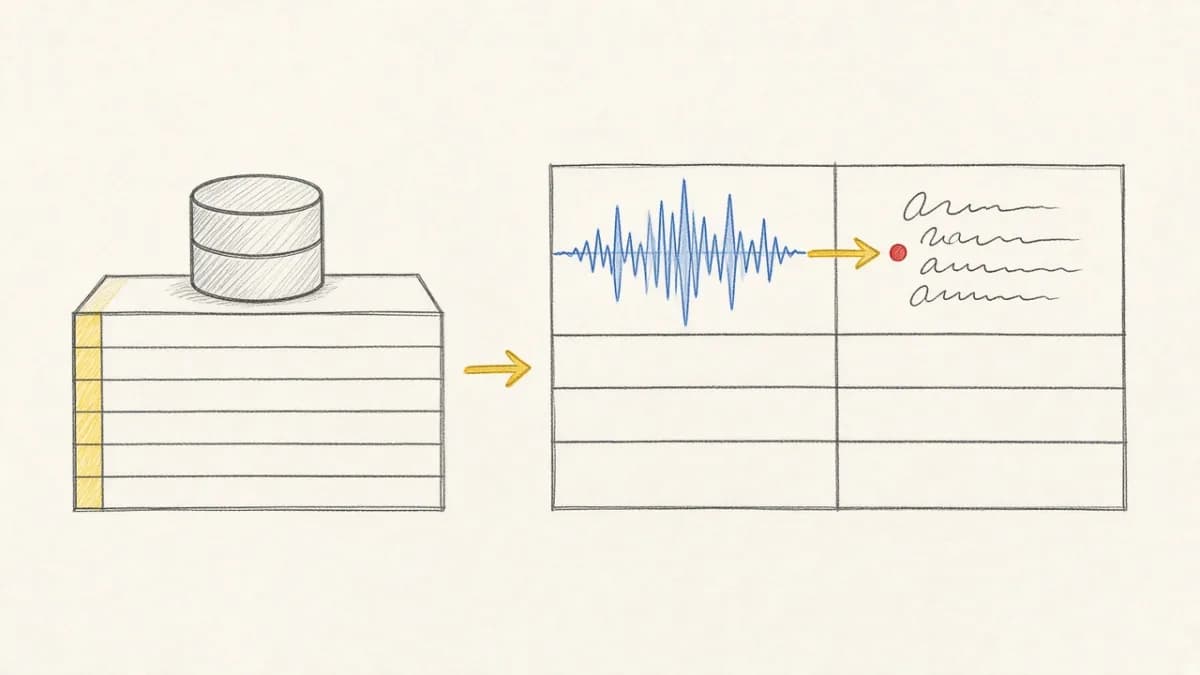
Instead of manually building intricate pipelines, you declare what you want to compute, and Pixeltable handles the how, including automatic updates, versioning, and lineage tracking.
Streamlining Computer Vision Workflows with Pixeltable#
Challenge: Reprocessing Video & Tracking Annotations#
Traditional CV pipelines require full reprocessing for model updates or data additions. Tracking which model version generated specific annotations becomes a major headache.
Solution: Pixeltable's Incremental Video Pipeline#
Pixeltable processes videos incrementally and declaratively.
Result: Reduced Costs and Faster Development#
A computer vision team using Pixeltable reduced their processing costs by 70% and cut development time by 90% because computations only run on new or changed data.
Building Efficient LLM/RAG Systems on Pixeltable#
Challenge: Embedding Computation & Debugging Responses#
In RAG systems, recomputing embeddings for entire document sets is costly and slow. Tracing why an LLM generated a specific response is difficult without clear data lineage.
Solution: Declarative Document Processing#
Pixeltable provides built-in iterators for chunking and automatically manages embedding updates.
Result: Lower Embedding Costs & Full Lineage#
An AI team building a customer support bot reduced embedding computation costs by 85% and gained complete visibility into LLM reasoning thanks to Pixeltable's incremental updates and automatic data lineage AI tracking.
Unifying Multimodal Data Processing#
Challenge: Managing Disparate Data Types#
Teams often need separate pipelines for video, audio, and text, leading to duplicated effort and complex infrastructure.
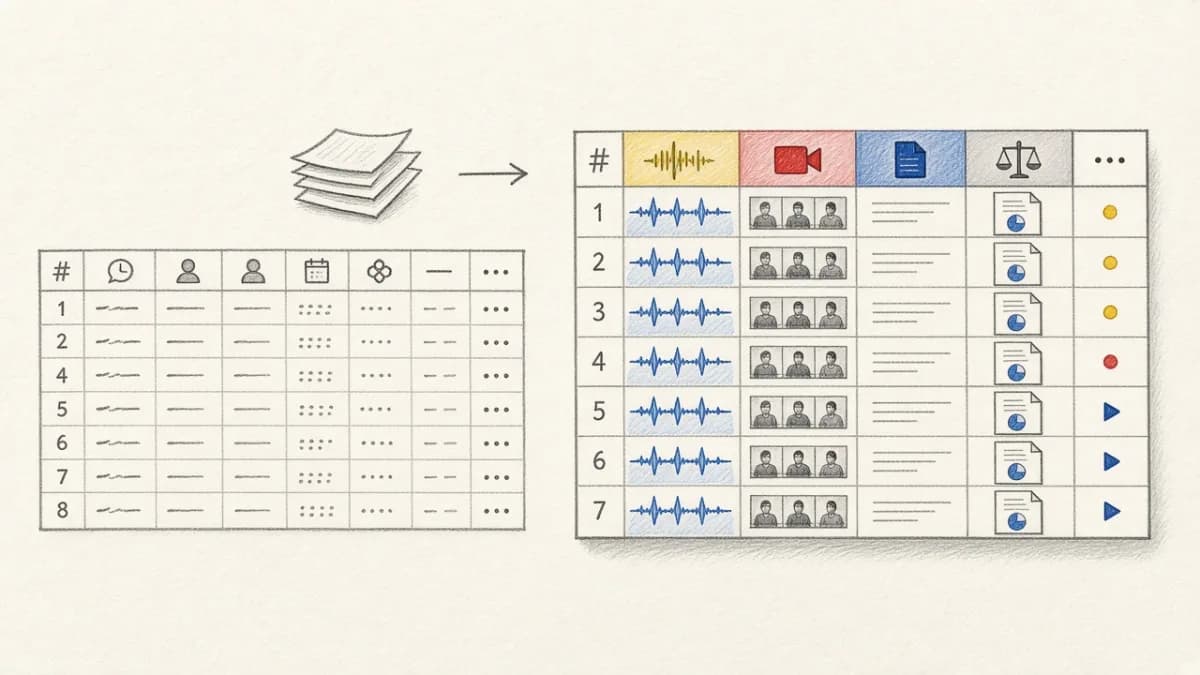
Solution: Cross-Modal Computed Columns#
Pixeltable's multimodal AI datastore handles diverse data types within a single table structure.
Result: Simplified Infrastructure & New Capabilities#
A media company unified their content understanding pipeline, slashing infrastructure code by 80% and enabling powerful new cross-modal search capabilities.
Why Pixeltable is the "Snowflake for AI"#
The parallels between Pixeltable and Snowflake highlight a fundamental shift in managing complex data workflows:
- Python-First Declarative Interface (like SQL): Instead of writing imperative pipeline code, you declare transformations using Python expressions, computed columns, and views. Pixeltable handles the execution, optimization, and incremental data processing.
- Scalable, Incremental Architecture: Like Snowflake's separation of storage and compute, Pixeltable efficiently handles large datasets and ensures only necessary computations are performed, saving significant time and cost.
- Complete, Unified Platform (with Versioning & Lineage): Pixeltable provides a single interface for diverse data types (video, audio, images, documents, embeddings) with built-in versioning and lineage tracking, making workflows robust and debuggable from day one.
Real-World Impact: Streamlined Annotation Management#
Challenge: Annotation Overhead & Data Lineage#
Managing annotations across large datasets and maintaining lineage between data, models, and annotations is complex.
Solution: Pixeltable & Label Studio Integration#
Pixeltable integrates seamlessly with tools like Label Studio.
Note: HTML entities like < and > are used within the code block string for the Label Studio config.
Result: Reduced Overhead & Perfect Lineage#
A computer vision startup reduced annotation management overhead by 60% while ensuring perfect data lineage between frames, models, and labels.
Getting Started with Pixeltable#
Ready to simplify your AI infrastructure? Explore these resources:
- Tutorials:
- Documentation: Pixeltable Docs
- Installation: Get started in minutes
Embrace the Future of AI Development with Pixeltable#
Stop wrestling with complex pipelines and start focusing on innovation. Pixeltable offers a transformative approach:
- From complex pipelines to declarative tables
- From repetitive processing to incremental updates
- From fragmented tools to a unified interface
- From development-production gaps to seamless deployment
Try Pixeltable Today, Join our Discord Community, and experience the future of machine learning development.