The Document Processing Challenge#
Building a document RAG (Retrieval-Augmented Generation) system sounds simple: extract text from PDFs, chunk it, embed it, and search. But production reality is messier:
- PDFs have tables, images, headers, and footers that need special handling
- Documents get updated and need re-processing
- You need to track which chunks came from which documents
- Embeddings need to stay in sync when documents change
- The pipeline needs to scale to thousands of documents
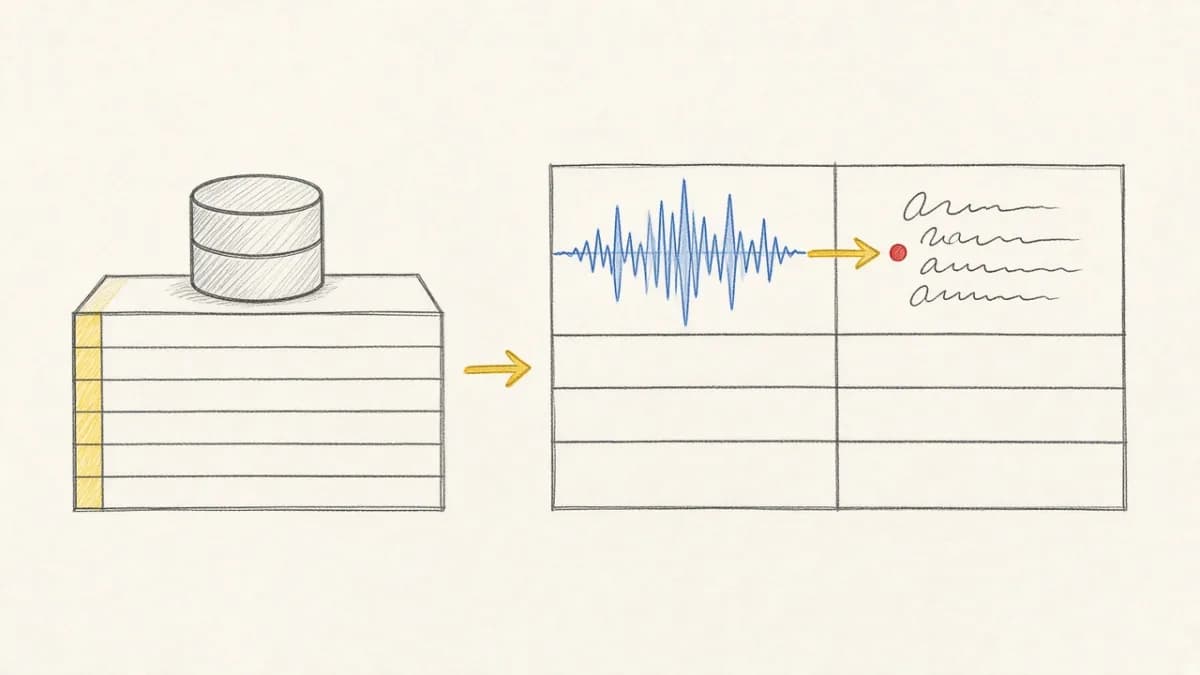
Pixeltable solves all of this with a declarative approach that handles extraction, chunking, embedding, and search in a single unified system.
Basic Document Pipeline#
Let's start with a simple but complete document processing pipeline:
Advanced: Handling Complex PDFs#
Real PDFs have tables, images, and complex layouts. Here's how to handle them:
Smart Chunking Strategies#
Different documents need different chunking strategies:
Enriching Chunks with Metadata#
Add useful metadata to each chunk for better retrieval:
Complete RAG Pipeline with LLM#
Here's a full RAG system that retrieves relevant chunks and generates answers:
Handling Document Updates#
When documents change, Pixeltable's incremental processing ensures only affected chunks are recomputed:
Scaling to Large Document Libraries#
Tips for handling thousands of documents:
Why Pixeltable vs Traditional RAG Stacks#
| Task | Traditional Stack | Pixeltable |
|---|---|---|
| Text extraction | PyPDF2, pdfplumber, unstructured | Built-in extract_text() |
| Chunking | LangChain, custom code | Built-in chunks() iterator |
| Embeddings | Separate embedding service | Computed column with caching |
| Vector store | Pinecone, Weaviate, pgvector | Built-in embedding index |
| Orchestration | Airflow, Prefect, custom | Automatic with dependencies |
| Updates | Manual re-indexing | Automatic incremental updates |
| Lineage | External tracking | Built-in versioning |
Conclusion#
Building production document RAG systems doesn't have to be complex. With Pixeltable's declarative approach:
- Define your pipeline as computed columns
- Let Pixeltable handle extraction, chunking, and embedding
- Get automatic incremental updates when documents change
- Scale from prototypes to production without changing code
The best part? Your entire document pipeline (from raw PDFs to searchable embeddings) lives in one place, fully versioned and queryable.
The class-based TableModel receipt for the same job is DocuVision.