Summary: Pixeltable has been open source from day one - a declarative framework for building robust multimodal AI pipelines with a fraction of the work. This approach simplifies AI development across video, image, audio, and text workloads. Years of real-world experience have shaped this flexible, Python-native framework for both batch and streaming AI pipelines.
The Evolution of Multimodal AI Infrastructure#
Multimodal AI has become the cornerstone of modern applications, powering everything from autonomous vehicles to content moderation systems. Over the past few years, we've seen AI evolve from simple text processing to complex workflows that seamlessly integrate video, images, audio, and structured data.
With the explosion of foundation models, vector databases, and real-time AI applications, that evolution continues with major advances in multimodal processing, incremental computation, and unified data orchestration.
Building upon the strong foundation of Python's AI ecosystem, we've been developing Pixeltable as an open-source solution from the beginning:
Pixeltable provides a declarative framework for building reliable, scalable multimodal AI pipelines - and it's been open source since day one.
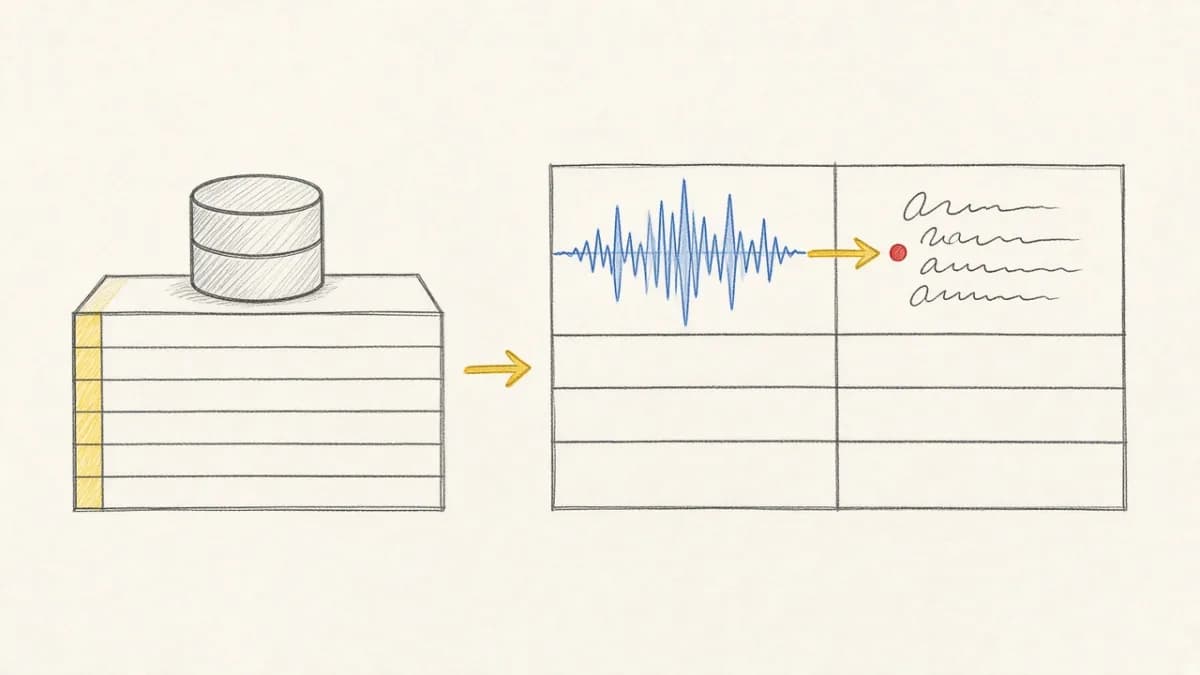
Pixeltable extends declarative programming from individual AI functions to complete multimodal pipelines - allowing developers to define what their AI system should accomplish, and letting Pixeltable figure out how to execute it efficiently. The design draws on years of observing real-world multimodal AI workloads, codifying what we've learned into a declarative API that covers the most common patterns - including both batch and streaming flows.
Declarative APIs Make Multimodal AI Simpler and More Maintainable#
Through years of working with real-world AI teams, we've seen common challenges emerge when building production multimodal pipelines:
- Too much time spent on data plumbing - handling video frame extraction, audio transcription, image preprocessing, and format conversions. This is undifferentiated heavy lifting that every team ends up maintaining instead of focusing on core AI logic.
- Reimplementing the same patterns across projects - leading to inconsistency and operational overhead when dealing with embeddings, vector indexes, and incremental processing.
- Lacking a standardized framework for testing, lineage, versioning, and monitoring multimodal AI workflows at scale.
At Pixeltable, we began addressing these challenges by codifying common AI engineering best practices into an open-source framework. Pixeltable took a declarative approach: instead of writing complex orchestration code yourself, you specify the final state of your AI pipeline, and the engine takes care of things like dependency mapping, incremental processing, caching, error handling, and retries for you.
The result was a big leap forward in productivity, reliability, and maintainability - especially for teams managing complex multimodal AI pipelines.
Since launching Pixeltable, we've learned a lot.
We've seen where the declarative approach can make an outsized impact in AI development; and where teams needed more flexibility and control. We've seen the value of automating complex multimodal orchestration and incremental processing; and the importance of building on open Python APIs to ensure portability and developer freedom.
That experience informed our commitment: A first-class, open-source, Python-native framework for declarative AI pipeline development.
From AI Functions to End-to-End Pipelines: The Next Step in AI's Declarative Evolution#
Python libraries like scikit-learn and transformers made individual AI operations declarative: instead of implementing neural networks with low-level tensor operations, developers could simply instantiate models to describe the result they wanted, and the framework handled the rest.
Pixeltable's Declarative AI Pipelines builds on that foundation and takes it a step further - extending the declarative model beyond individual AI functions to complete multimodal workflows spanning multiple data types and models. Now, developers can define what AI transformations should exist and how they're derived, while Pixeltable determines the optimal execution plan, manages dependencies, and handles incremental processing automatically.
Built with openness and composability in mind, Pixeltable's Declarative AI Pipelines offers:
- Declarative APIs for defining multimodal tables and AI transformations
- Native support for video, image, audio, and text processing workflows
- AI-aware orchestration with automatic dependency tracking, execution ordering, and incremental processing
- Automatic caching, retries, and versioning for AI model outputs and embeddings
- Support for both Python and SQL interfaces
- Execution transparency with full access to underlying computation graphs
And most importantly, it's Python all the way down - no wrappers or black boxes.
Declarative Multimodal AI in Action#
Here's how Pixeltable transforms a complex video analysis pipeline into simple, declarative code:
Compare this to traditional approaches that require hundreds of lines of orchestration code, manual dependency management, and custom caching logic.
A New Standard, Proven in Production#
Pixeltable represents years of work across the Python AI ecosystem and real-world production deployments. It's inspired by what we've learned from building multimodal AI applications - designed to be flexible, extensible, and fully open source from the beginning.
We built Pixeltable as a foundation the entire Python AI ecosystem can build upon - whether you're orchestrating pipelines in your own platform, building domain-specific abstractions, or contributing directly to the open source community.
Advanced Multimodal Capabilities#
Pixeltable's declarative framework goes beyond simple data processing to handle the unique challenges of multimodal AI:
Intelligent Incremental Processing#
When you add new videos to your dataset, Pixeltable automatically:
- Extracts frames only from new videos
- Runs AI models only on new frames
- Updates vector indexes incrementally
- Maintains consistency across all derived data
What's Next#
Pixeltable is available now as an open-source project on GitHub under the Apache 2.0 License. You can explore the full documentation and get started immediately.
If you're building multimodal AI applications today, we invite you to explore the declarative model. Our goal is to make AI pipeline development simpler, more reliable, and more collaborative for everyone.
The future of AI is about more than just better models. It's about better infrastructure, better developer experience - and now, better patterns for building on top of them.
We believe declarative pipelines are becoming the new standard for multimodal AI development. And we're excited to continue building that future together, with the community, in the open.
Get Started Today#
Ready to transform your multimodal AI workflows? Here's how to get started:
- Try Pixeltable on GitHub - Full source code and examples
- Read the Documentation - Comprehensive guides and tutorials
- Interactive Playground - Try Pixeltable in your browser
- AI Transformations Belong in the Schema - Why computed columns are the declarative primitive for AI
- Join our Discord Community - Connect with other developers
The declarative revolution in multimodal AI is here. Join us in continuing to build the future of AI infrastructure.